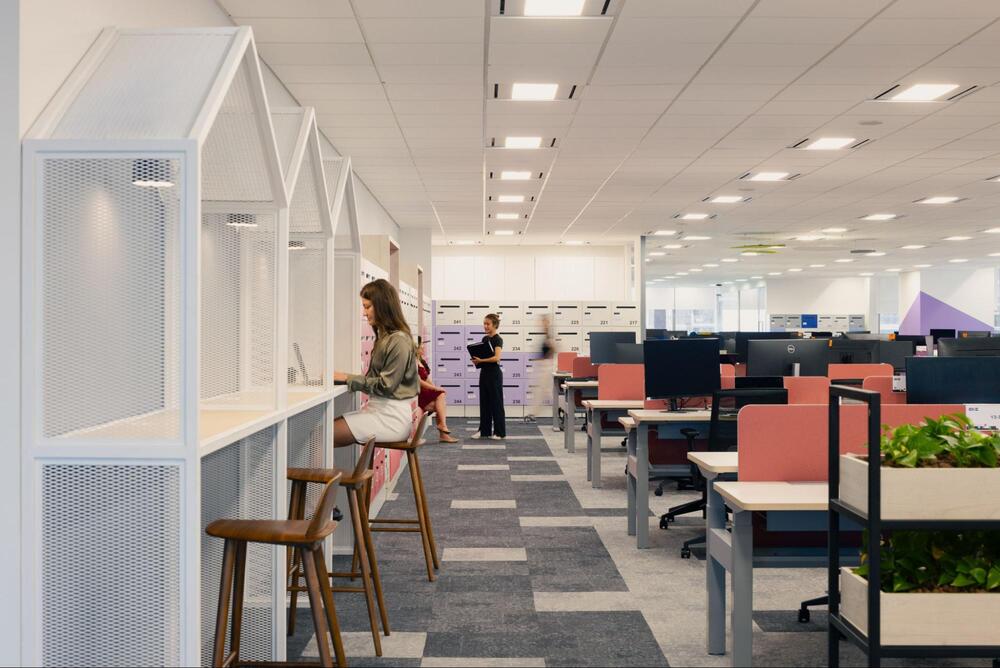
Work patterns have changed. Offices no longer need fixed desks or rigid layouts. Companies now require spaces that support focus work, collaboration, and hybrid teams at the same time. Agile office space design addresses this shift by replacing static setups with flexible, activity-based environments. Find more with OSCA in this article.
1. What is agile office space design?
Agile office space design is a workplace approach that removes fixed seating and allows employees to choose where and how they work. It focuses on flexibility, shared spaces, and activity-based zones. Instead of assigning one desk per person, teams use a mix of work settings based on tasks such as focus work, meetings, or collaboration.
An agile office layout replaces static desks with adaptable areas. These areas include quiet zones, open collaboration spaces, meeting rooms, and informal lounges. Employees move between these zones during the day. This model supports both in-office and hybrid teams.
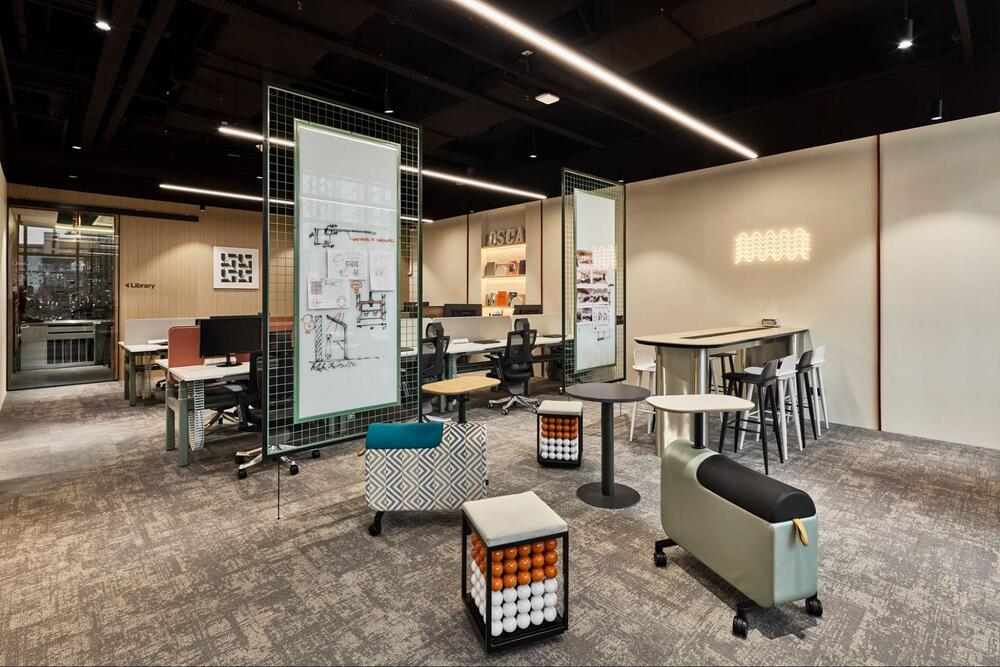
Agile office space design with flexible work zones
Agile office vs Traditional office
A traditional office assigns a fixed desk to each employee. It often uses a uniform layout with rows of workstations. This setup limits movement and wastes space when employees are absent.
An agile workspace design changes this model. It uses shared desks, flexible seating, and multi-purpose zones. Space is used based on real demand, not fixed allocation.
| Factor | Traditional Office | Agile Office Design |
| Seating | Fixed desks | Flexible, shared seating |
| Space use | Static | Dynamic and optimized |
| Collaboration | Limited | Built into layout |
| Remote work | Not supported well | Fully supported |
| Cost efficiency | Lower | Higher through optimization |
2. Benefits of agile office space design
Below are the key benefits of an agile office layout.
Increased productivity
Agile workspace design supports task-based work. Employees choose the right space for each task. This reduces distractions and improves focus. For example: use quiet zones for deep work, use open areas for discussion, use meeting rooms for structured sessions
Better employee experience
Employees gain control over how and where they work. This is a core part of agile office design. It supports comfort, movement, and choice. Key factors: ergonomic furniture, access to quiet and social spaces, flexibility during the day
Cost efficiency
Agile office space design reduces unused space. Not all employees are in the office at the same time. Fixed desks create waste. An agile office layout solves this by sharing resources.
Supports hybrid work models
Hybrid work requires flexible space. Agile workspace design supports both in-office and remote employees. Many providers of agile workspace solutions Singapore focus on this model.
Enhances innovation
Agile workplace design increases interaction between teams. Open and shared spaces support quick exchange of ideas. Innovation happens when people meet and share.
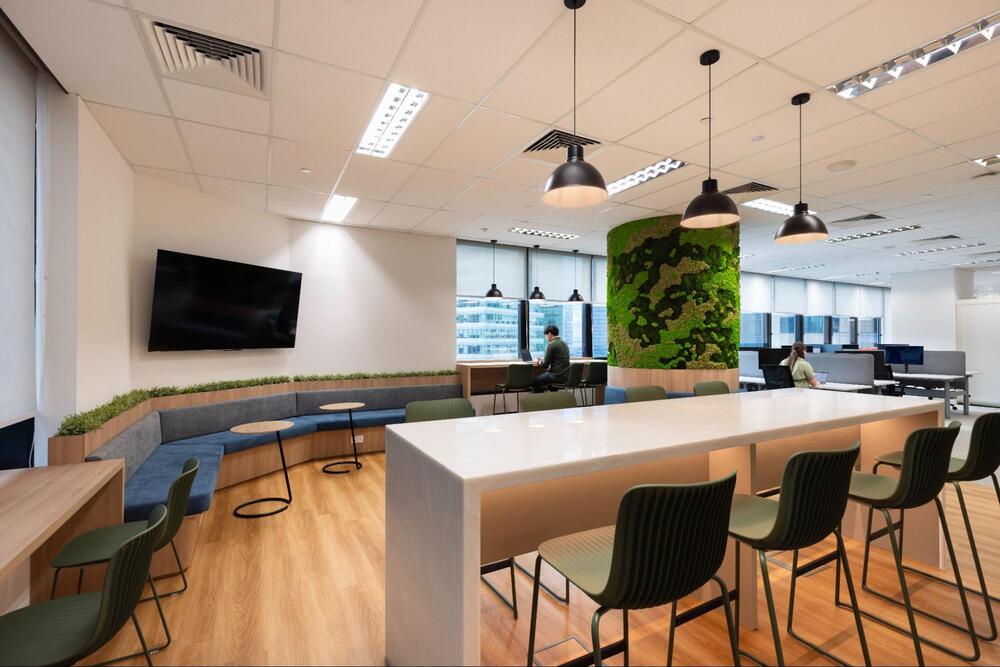
Agile workspace design supporting focus and collaboration
3. Key principles of agile office design
Agile office space design works only when it follows clear principles. These principles guide how space, people, and technology interact. A structured agile office design reduces waste, supports hybrid work, and improves daily operations.
3.1 Flexibility & Adaptability
Agile workspace design must allow fast changes without major renovation. Space should support different tasks during the same day.
You can build flexibility with these steps:
- Use modular furniture: Select desks and tables that can be moved or reconfigured.
- Install movable partitions: Create rooms that can expand or shrink based on team size.
- Design multi-purpose areas: Use one space for meetings, training, or events.
- Avoid fixed layouts: Do not lock the office into one structure.
A flexible agile workspace layout ensures that space adjusts to business needs instead of forcing teams to adapt to the space.
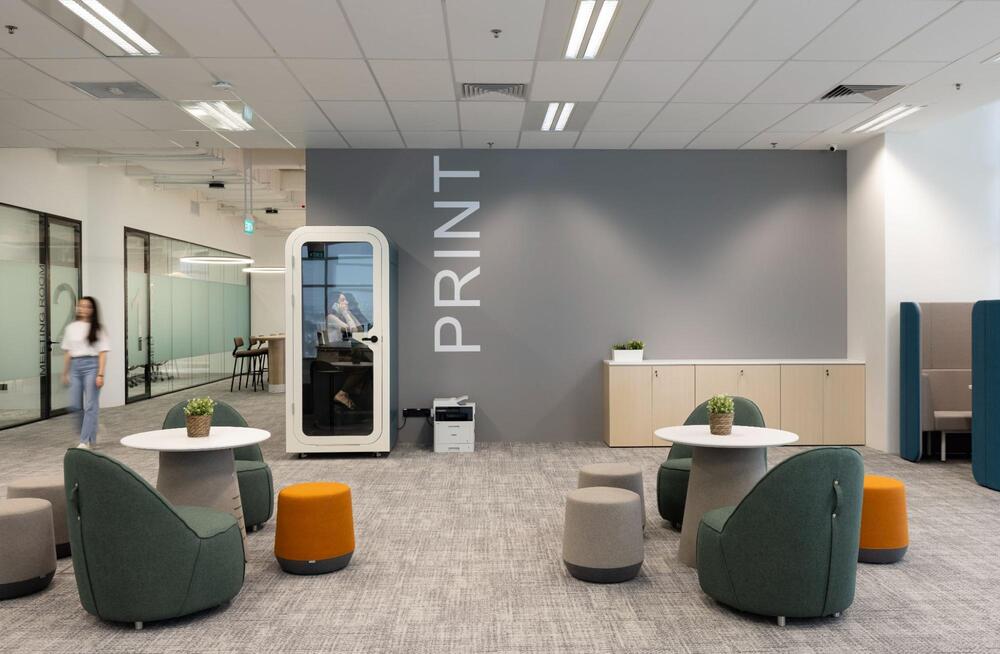
Modular furniture in agile office space design
3.2 Employee-centric design
Agile workplace design must focus on how people work. This includes comfort, health, and usability.
You can apply this principle with the following actions:
- Improve ergonomics: Provide adjustable chairs, desks, and monitor setups.
- Support wellbeing: Ensure access to natural light, ventilation, and rest areas.
- Offer workspace choices: Include quiet zones, open areas, and private booths.
- Collect employee feedback: Run surveys to understand pain points and improve layout.
An employee-focused agile office layout reduces fatigue and improves engagement. It also supports retention by creating a better daily experience.
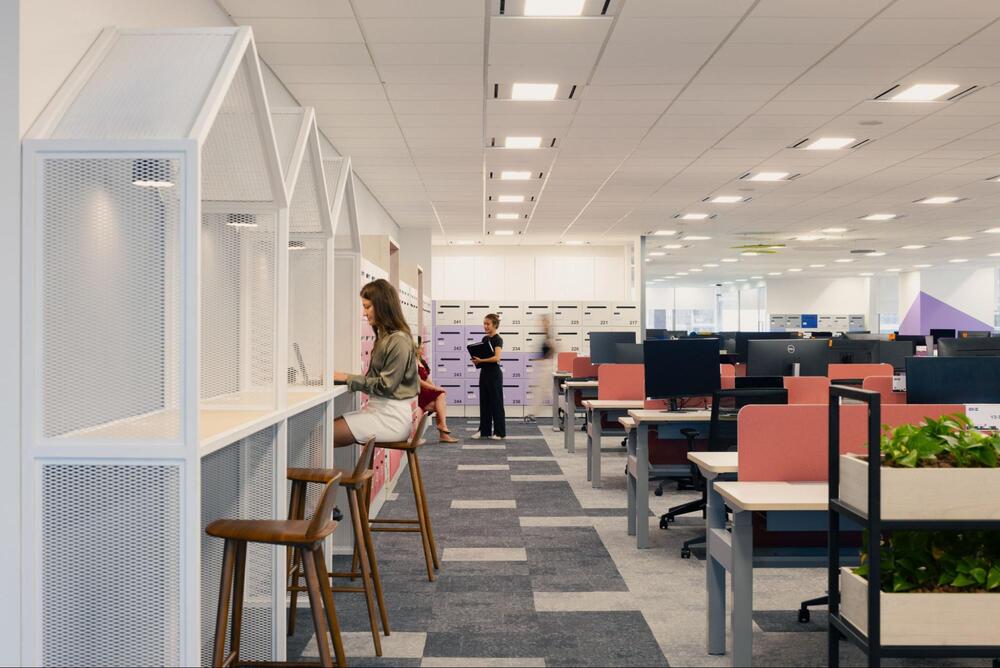
Human-centered agile workplace design for employee wellbeing
3.3 Collaboration & Communication
Agile office design must support both teamwork and focused work. Poor balance leads to noise or isolation.
You can improve collaboration with these steps:
- Create dedicated collaboration zones: Set up open areas for team discussions and group work.
- Provide meeting rooms of different sizes: Support both small and large meetings.
- Control noise levels: Use acoustic materials and zoning to separate quiet and active areas.
- Encourage visibility: Place shared spaces in central locations.
A balanced agile workspace layout ensures that teams can communicate without affecting others who need focus.
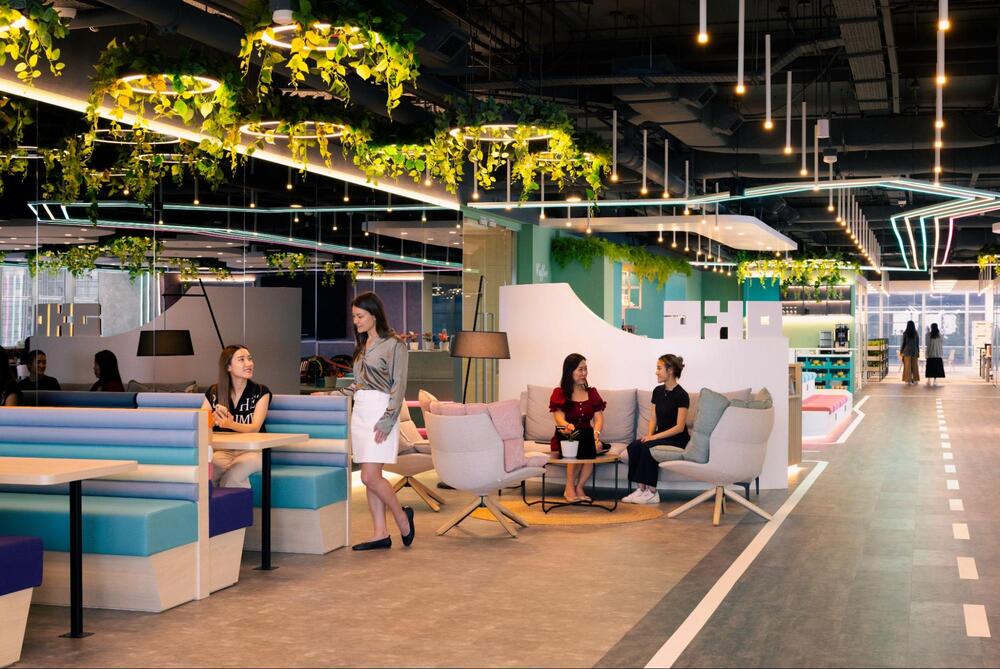
Agile office layout with dedicated collaboration zones
3.4 Technology integration
Agile workspace solutions Singapore and across Asia rely on technology to manage flexible spaces. Without proper tools, shared environments become inefficient.
You can integrate technology by:
- Using desk booking systems: Allow employees to reserve desks in advance.
- Installing meeting room booking tools: Avoid conflicts and unused spaces.
- Equipping hybrid meeting rooms: Use video conferencing systems for remote collaboration.
- Tracking space usage data: Use sensors or software to monitor occupancy.
Technology supports agile office space design by making space usage visible and manageable.
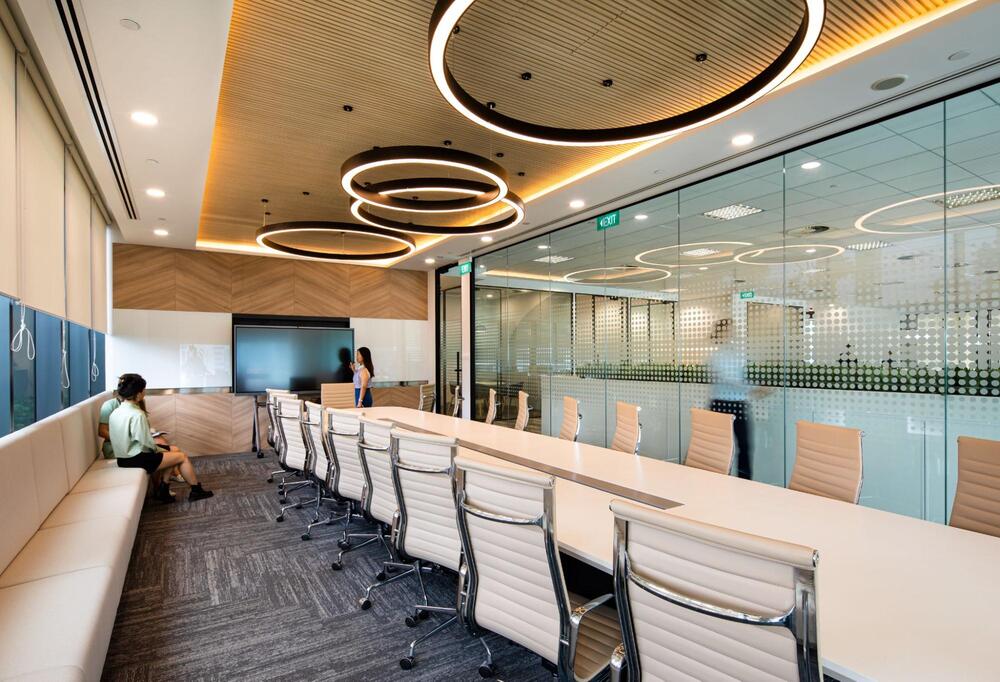
Smart agile workspace solutions Singapore with booking systems
3.5 Space optimization
Agile office design aims to use every square meter effectively. This reduces cost and improves efficiency.
You can optimize space with these steps:
- Analyze occupancy data: Identify underused areas and redesign them.
- Reduce assigned seating: Replace fixed desks with shared workstations.
- Increase usable zones: Convert unused areas into functional spaces.
- Align layout with business needs: Match space allocation to team size and work type.
An optimized agile workspace design lowers rent per employee and improves overall performance.
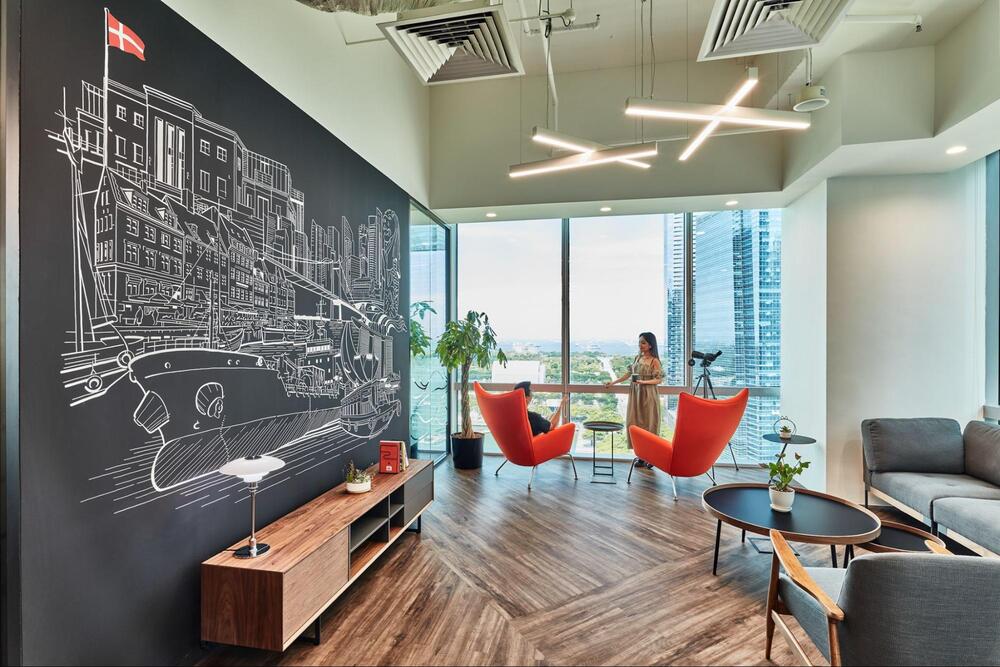
Efficient agile workspace layout reducing unused space
4. How to implement agile office space design?
Agile office space design requires a structured process. You cannot rely on trends or assumptions. A successful agile office layout is based on data, clear planning, and continuous adjustment. This section provides a step-by-step method that you can apply in real projects.
4.1 Assess your business needs
Every agile workplace design starts with understanding how your team works. You need real data, not guesses.
Focus on:
- Work patterns (focus, meetings, calls)
- Number of employees vs daily occupancy
- Current pain points (noise, lack of space, unused desks)
Steps to follow:
- Conduct employee surveys and interviews
- Track office usage for 2–4 weeks
- Identify peak and low occupancy periods
- List key problems in the current office
4.2 Define workplace strategy
A clear strategy connects business goals with space design. Without this, your agile office design will fail.
Define:
- Work model (onsite, hybrid, remote)
- Space allocation rules
- Employee policies (desk sharing, booking)
Steps to follow:
- Set a target ratio for desks (e.g. 0.7 desk per employee)
- Define types of spaces required
- Create guidelines for using each space
- Align HR and management policies
4.3 Plan zoning & Layout
Zoning is the core of agile office space design. Each zone supports a specific task.
Common zones:
- Focus areas
- Collaboration spaces
- Meeting rooms
- Quiet pods
- Breakout areas
Steps to follow:
- Divide office space into clear zones
- Separate quiet and noisy areas
- Place shared spaces in central locations
- Ensure easy movement between zones
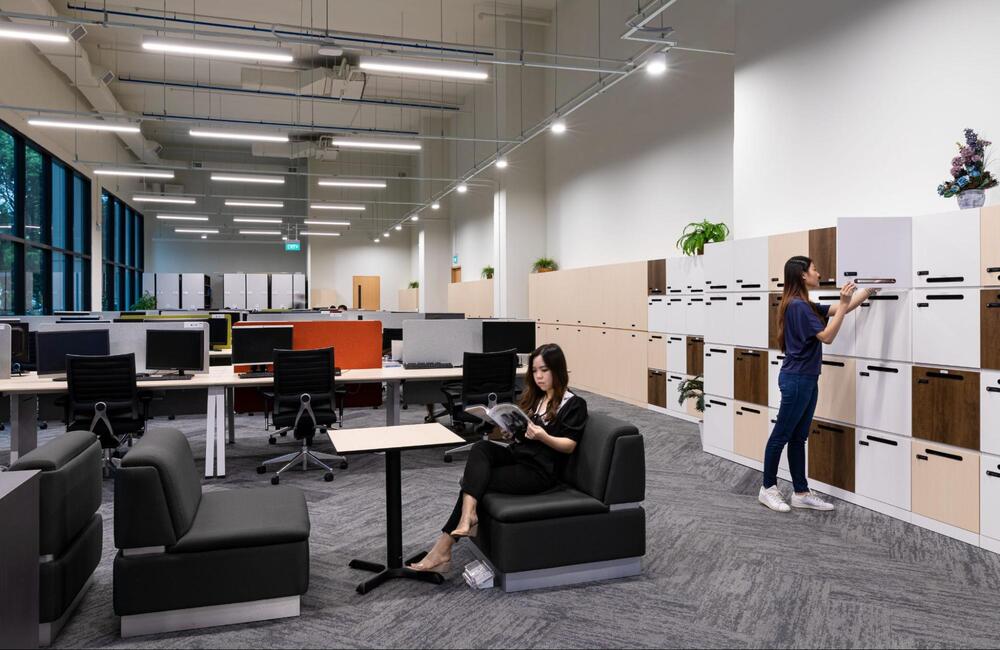
Zoning strategy in agile workspace layout for different tasks
4.4 Integrate technology
Technology supports daily operations in an agile workspace design. Without it, flexibility will fail.
Key tools:
- Desk booking systems
- Meeting room scheduling
- Video conferencing tools
- Space usage analytics
Steps to follow:
- Choose a booking platform for desks and rooms
- Install screens and conferencing tools in meeting rooms
- Use sensors or software to track usage
- Train employees on all systems
4.5 Partner with an expert – OSCA
Working with an expert reduces risk. A professional partner can guide design, build, and optimization.
A partner like OSCA offers:
- Experience from projects across Asia
- Human-centered agile workplace design
- Balance between design and practical use
- End-to-end service from concept to construction
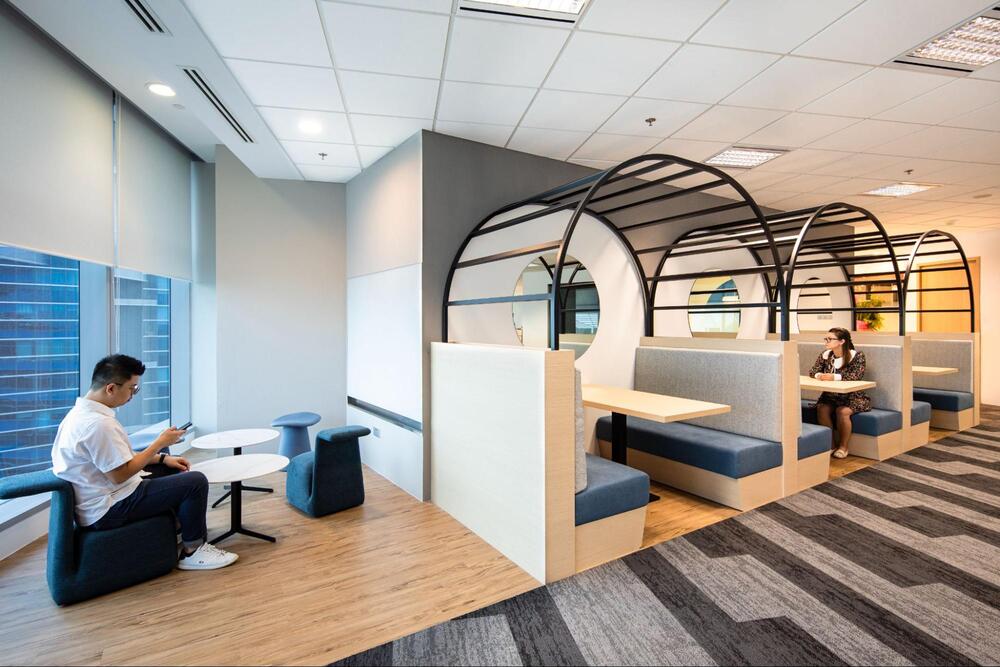
End-to-end agile office space design and build by OSCA
Agile office space design is not a trend. It is a structured approach to managing space, people, and work patterns. For companies that want to reduce risk and speed up implementation, working with an expert like OSCA provides added value. With experience in agile workspace solutions in Singapore and across Asia, OSCA delivers practical, human-centered designs from concept to construction. This ensures your agile office design is efficient, scalable, and ready for long-term growth.