Workplace design is no longer defined solely by layout and furniture specification. Organizations now prioritize environments that support performance, well-being and brand identity in equal measure. Within this context, the moss wall in offices has emerged as a practical and measurable design intervention rather than a decorative trend. Find more with OSCA Asia.
1. What Is a Moss Wall in Office Design?
A moss wall in office design is a vertical surface covered with either preserved or living moss, installed to enhance spatial quality, acoustic comfort, and workplace well-being. It is commonly used in reception areas, boardrooms, collaborative zones, and branding walls. An office moss wall is part of biophilic design, which integrates natural elements into built environments to support human performance and health.
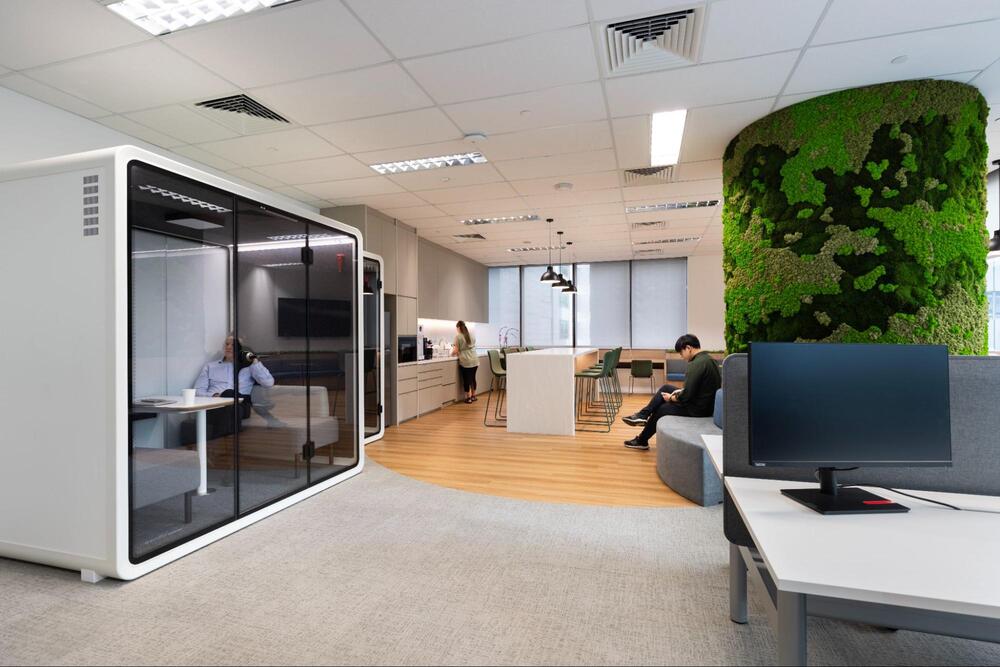
Modern moss wall installation
A moss wall differs from a vertical garden. A vertical garden uses soil-based or hydroponic systems with a variety of plants. It requires irrigation infrastructure, drainage layers, and access for maintenance. A moss wall in office settings does not require soil or complex irrigation if preserved moss is used. Vertical gardens suit large atriums or façades. Moss walls suit controlled indoor environments where space, acoustic performance, and low maintenance are priorities.
2. Benefits of Installing a Moss Wall in Office Spaces
A moss wall in office environments delivers measurable benefits across aesthetics, employee well-being, acoustics, maintenance efficiency, and sustainability. It is not a decorative trend. It is a functional design solution aligned with modern workplace standards and corporate performance goals. Below are the core benefits.
2.1 Improves Workplace Aesthetics
A moss wall office installation introduces natural texture and visual depth into structured commercial interiors. Most workplaces are built with glass, metal, and composite materials. Moss provides contrast and balance without adding complexity.
An office moss wall can:
- Create a focal point in reception areas
- Strengthen brand identity through logo integration
- Define feature walls in open-plan layouts
- Improve spatial perception in narrow corridors
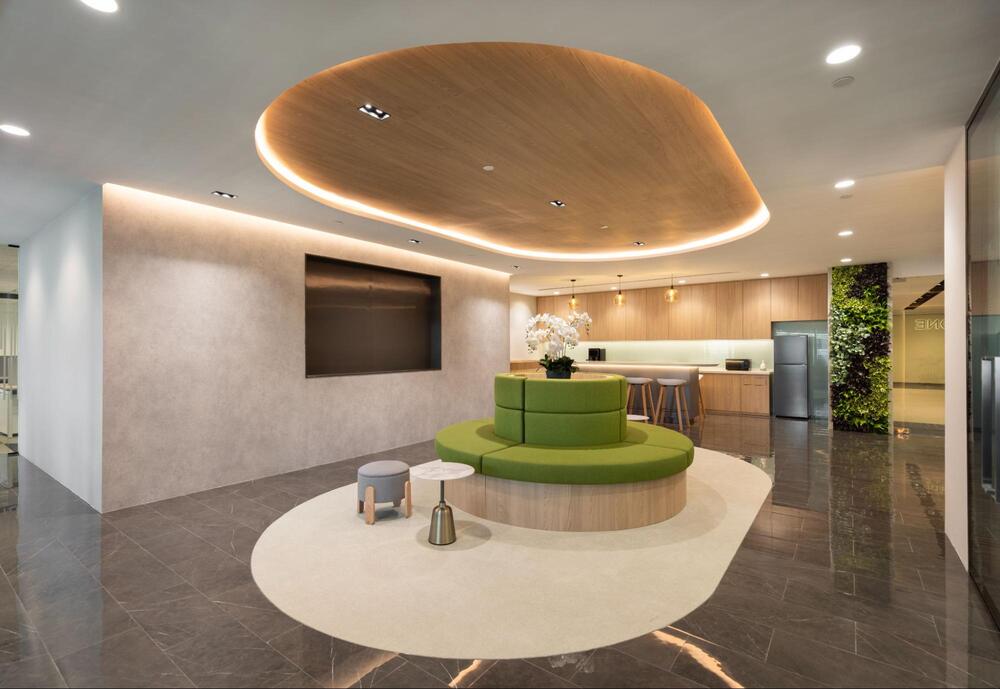
Moss wall enhancing workplace aesthetics and brand identity
2.2 Supports Employee Well-being
Biophilic design principles link natural elements with improved cognitive function and reduced stress. A moss wall for office installations introduces a natural reference point within high-pressure work environments.
Research in workplace design indicates that visual exposure to greenery can:
- Reduce perceived stress levels
- Support focus and task completion
- Improve mood consistency
- Encourage longer concentration periods
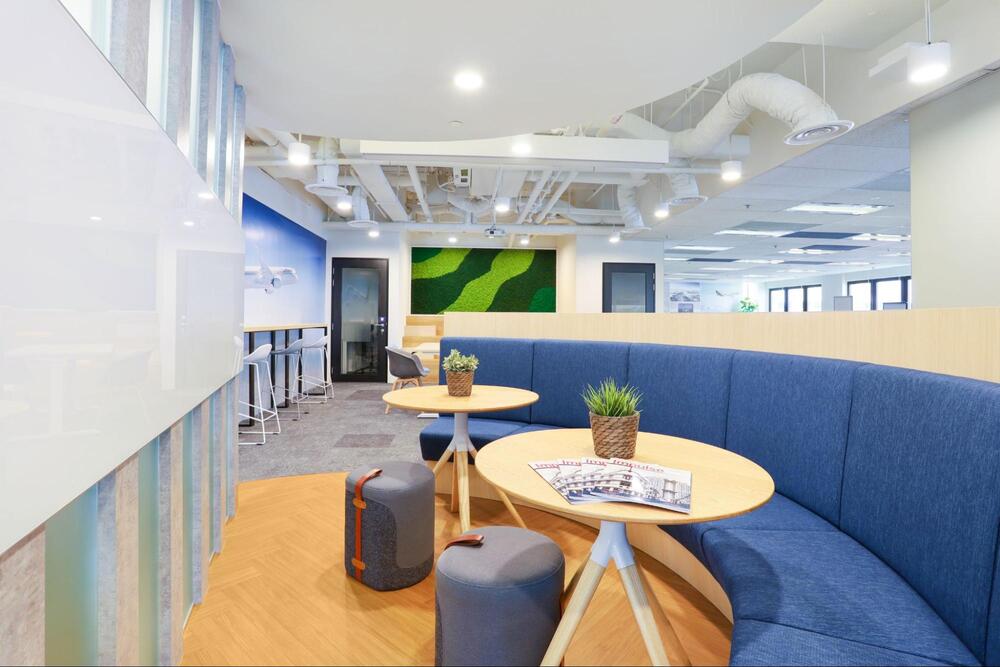
Acoustic performance of moss wall in open-plan office
2.3 Acoustic Absorption and Noise Reduction
Open-plan offices often struggle with echo and sound transmission. Moss has a fibrous structure that absorbs sound waves. A moss wall office installation can reduce reverberation and improve speech clarity. It is most effective in meeting rooms, phone booths, collaborative zones and reception areas.
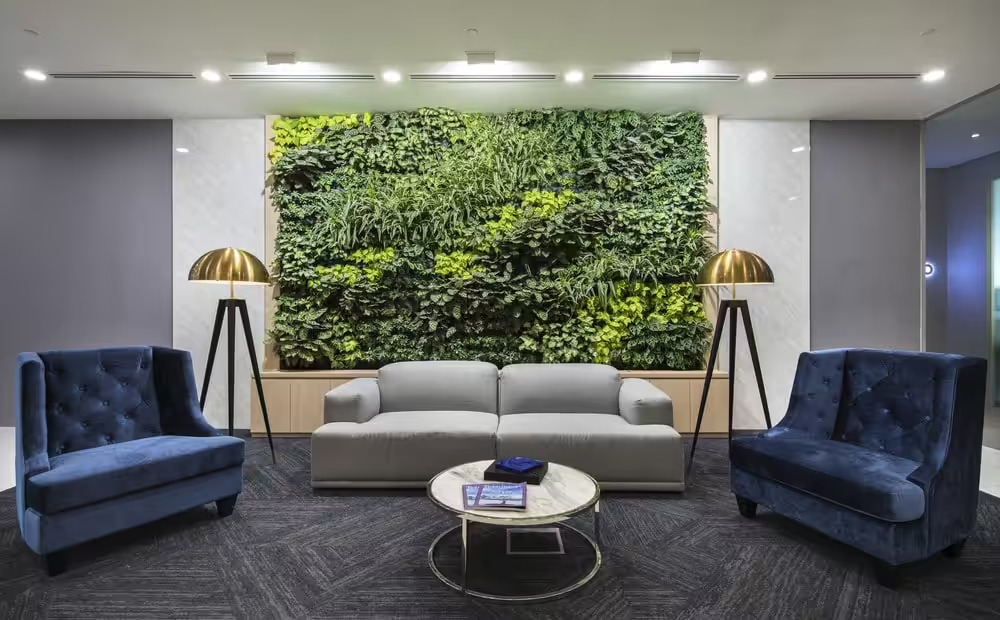
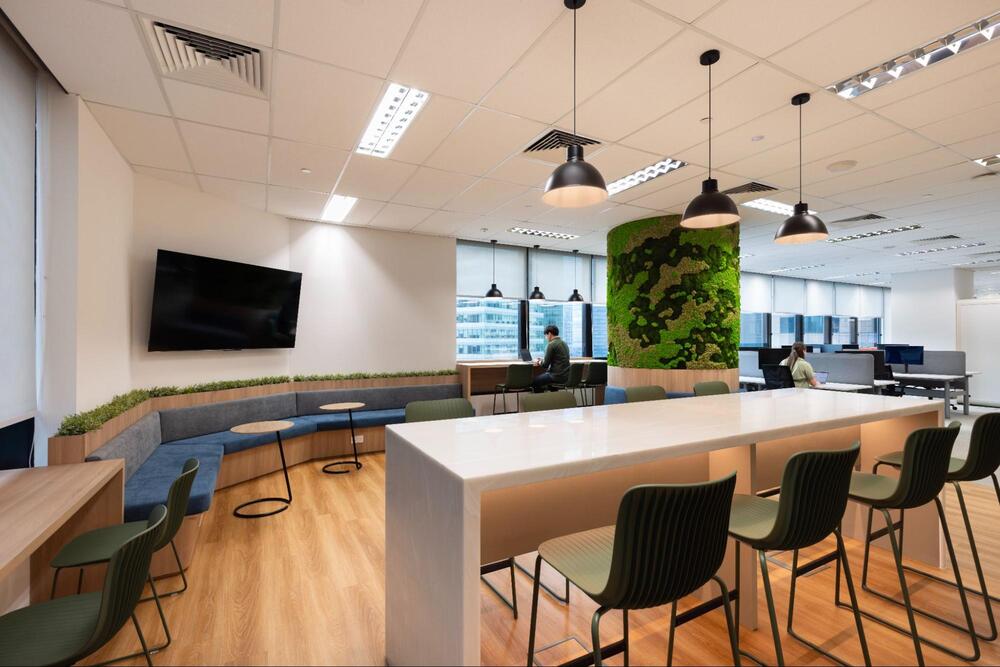
Moss wall supporting employee well-being in collaborative spaces
2.4 Low Maintenance and Long Lifespan
Preserved moss requires no watering, trimming, or sunlight. This makes a moss wall in office environments operationally efficient.
Key advantages include:
- No irrigation system
- No drainage requirement
- No fertilizer use
- No ongoing plant care contracts
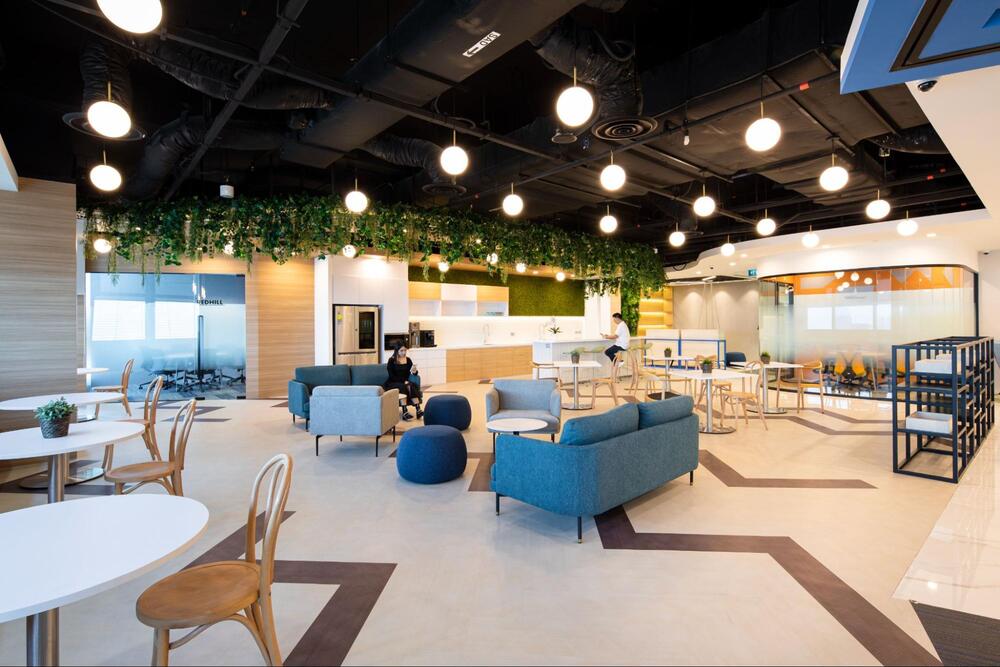
Low-maintenance preserved moss wall system detail
2.5 Sustainable and Eco-Friendly Design Choice
Sustainability is a business requirement. A moss wall office feature supports green building objectives when specified responsibly. Preserved moss is biodegradable and harvested under controlled processes. It does not consume water or electricity after installation. It contributes to:
- Reduced resource consumption
- Support for LEED and WELL design categories
- Improved indoor environmental quality
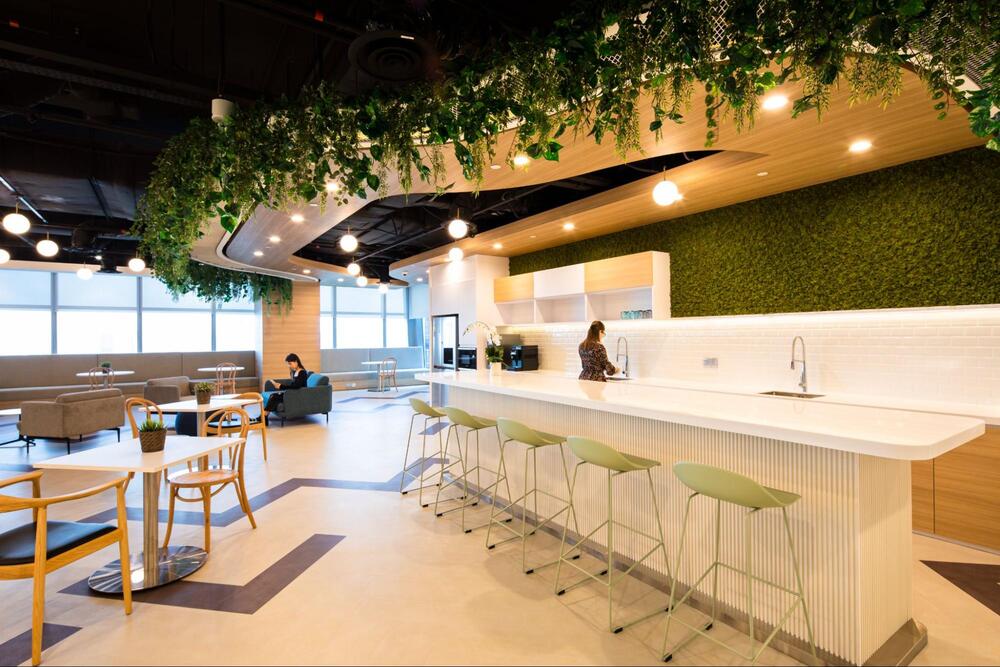
Sustainable office design with preserved moss installation
3. Types of Moss Walls for Offices
There are three primary types of moss wall for office applications:
- Preserved moss wall
- Living moss wall
- Mixed green wall (moss combined with plants)
The table below provides a high-level comparison:
| Type | Maintenance Level | Irrigation Required | Best For | Cost Range |
| Preserved Moss Wall | Low | No | Corporate offices, reception areas | Moderate |
| Living Moss Wall | Medium–High | Yes | Feature spaces with maintenance support | Higher |
| Mixed Green Wall | Medium | Partial | Branding and visual diversity | Moderate–High |
The following sections explain each type in detail and outline how to implement them effectively.
3.1 Preserved Moss Wall
A preserved office moss wall uses natural moss that has been stabilized through a preservation process. The sap inside the plant is replaced with a biodegradable solution. This stops growth while maintaining texture and color. This is the most common moss wall office solution for corporate environments because it does not require watering, soil, or sunlight.
Key characteristics:
- No irrigation system
- No direct light requirement
- Minimal ongoing maintenance
- Lifespan of approximately 5–10 years
- Suitable for air-conditioned offices
Preserved moss works best in controlled indoor environments where humidity remains between 40% and 60%. It is suitable for reception walls, boardrooms, and collaborative areas.
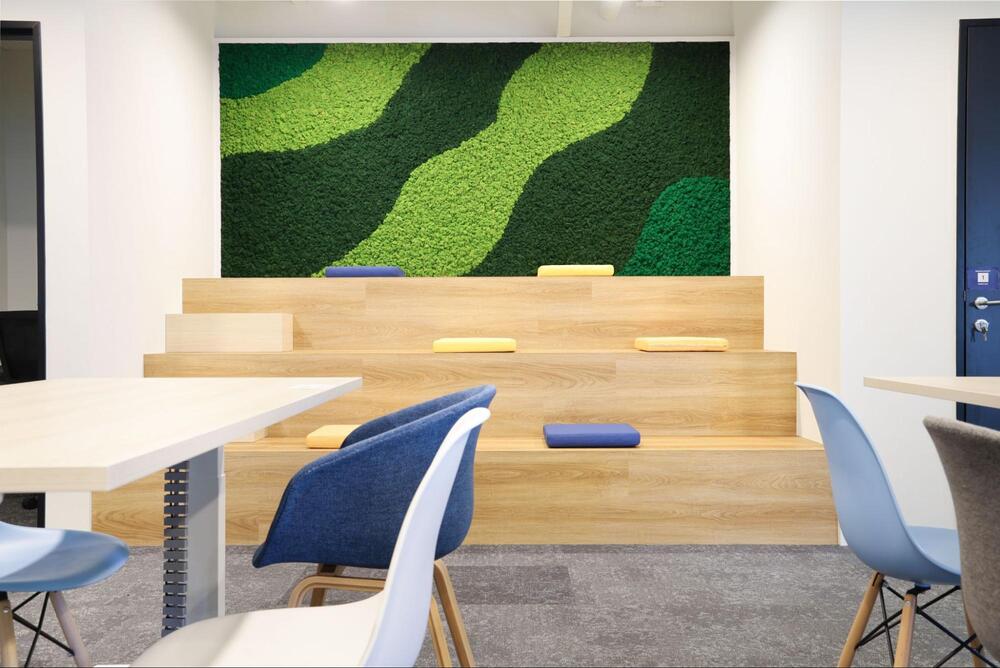
Preserved moss wall panel close-up texture
3.2 Living Moss Wall
A living moss wall for office installations uses biologically active moss species. This system requires irrigation, drainage, and controlled lighting. It is more complex than preserved moss. It demands regular horticultural maintenance.
Key characteristics:
- Requires automated watering
- Requires grow lighting in low-light interiors
- Needs drainage and waterproofing layers
- Ongoing maintenance contract recommended
This type of office moss wall suits organizations that prioritize ecological authenticity and have facilities management support.
Living moss wall with integrated irrigation system
3.3 Mixed Green Wall (Moss + Plants)
A mixed system combines preserved moss with live plants. This creates depth and variation while reducing full irrigation dependency. This hybrid moss wall in office format balances aesthetics and practicality. It is suitable for feature walls where visual diversity is required.
Key characteristics:
- Combines preserved moss panels with selected live plants
- Partial irrigation for plant sections only
- Increased design flexibility
- Strong branding potential
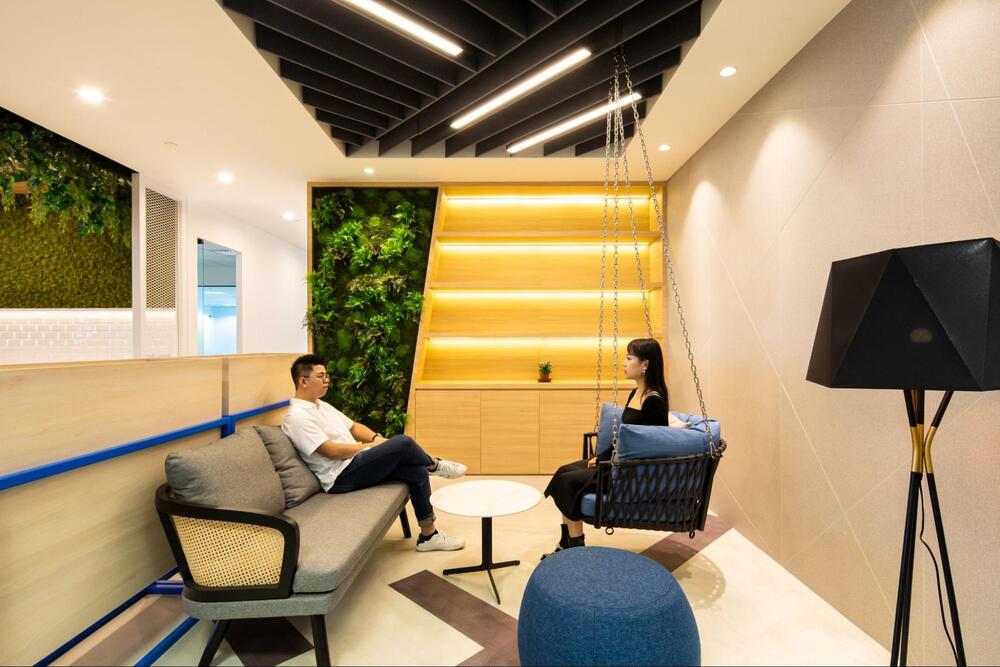
Mixed green wall combining moss and live plants
4. Creative Moss Wall Design Ideas for Offices
Reception Feature Wall
A reception area sets the first impression. A moss wall office installation in this zone establishes brand presence and spatial depth without structural reconstruction. This design works best behind the reception counter or along the primary visual axis.
Implementation steps:
- Step 1: Define Wall Dimensions: Measure the full width and height of the reception backdrop.
- Step 2: Determine Coverage Ratio: Cover 50–80% of the surface to create impact while maintaining balance.
- Step 3: Integrate Indirect Lighting: Install concealed LED strips above or behind the moss to create depth.
- Step 4: Maintain Clear Surroundings: Avoid cluttered adjacent finishes. Keep neighboring materials neutral.
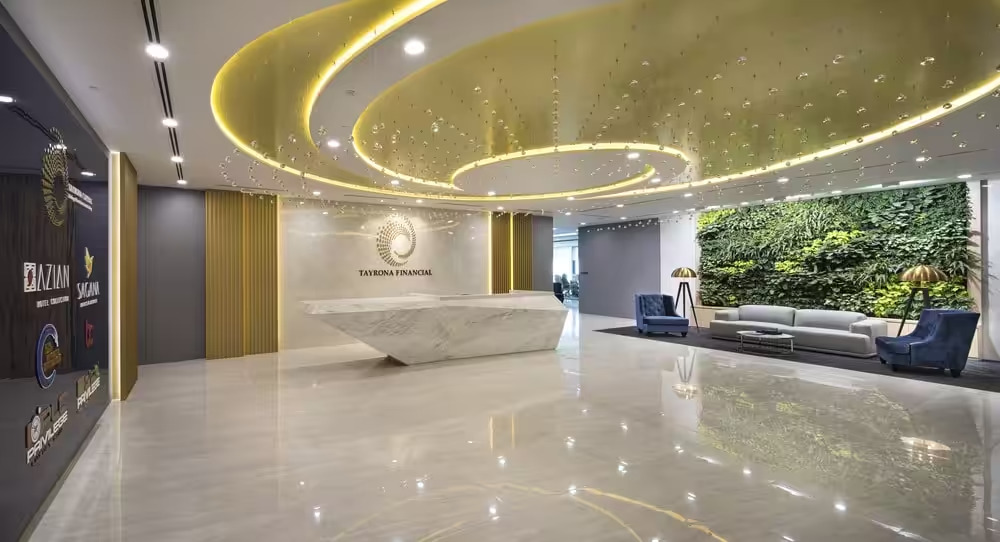
Reception feature wall with integrated moss branding
Branded Moss Logo Wall
A branded moss wall for office design incorporates corporate logos or lettering cut into or mounted onto the moss surface. This concept reinforces identity while maintaining a biophilic approach.
Implementation steps:
- Step 1: Convert Logo into Vector Format: Ensure scalability and precision for fabrication.
- Step 2: Select Mounting Method: Choose between raised acrylic lettering or recessed cut-out forms.
- Step 3: Coordinate Brand Colors: Use preserved moss tones that align with corporate guidelines.
- Step 4: Install Balanced Lighting: Ensure uniform illumination across logo surfaces to avoid shadow distortion.
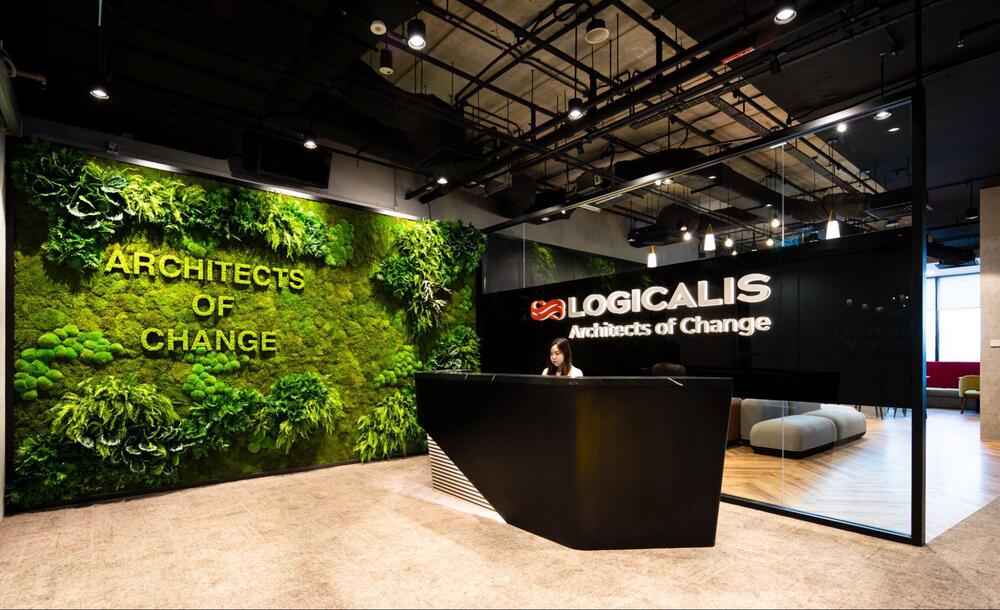
Branded moss logo wall in corporate lobby
Conference Room Accent Wall
Meeting rooms often suffer from echo and visual monotony. A moss wall in office conference rooms improves acoustics and reduces surface hardness. This application supports both functional and experiential goals.
Implementation steps:
- Step 1: Select the Primary Sound Reflection Surface: Install moss on the wall opposite the entrance or behind the main seating area.
- Step 2: Combine with Acoustic Backing Panels: Add sound-absorbing substrates to enhance performance.
- Step 3: Maintain Controlled Humidity: Ensure indoor humidity remains stable between 40 and 60%.
- Step 4: Avoid Direct Task Lighting Contact: Position lighting to highlight texture without heat exposure.
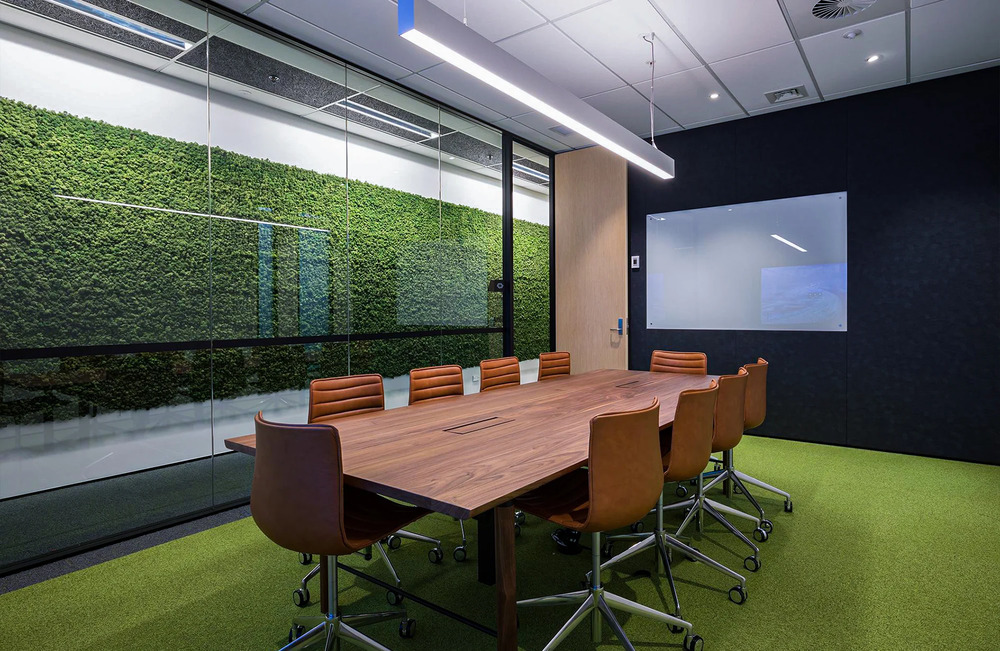
Conference room moss accent wall for acoustic control
Collaborative Zone Installation
Collaborative spaces benefit from natural reference points. A moss wall office feature in breakout areas can support focus and informal interaction. This approach works in open-plan environments where zoning is required.
Implementation steps:
- Step 1: Define the Collaboration Boundary: Use moss to visually separate teamwork areas from workstation zones.
- Step 2: Select Modular Panels: Modular systems simplify installation and future expansion.
- Step 3: Pair with Neutral Furniture: Avoid competing textures to maintain visual clarity.
- Step 4: Conduct Annual Inspection: Ensure surface integrity and color stability.
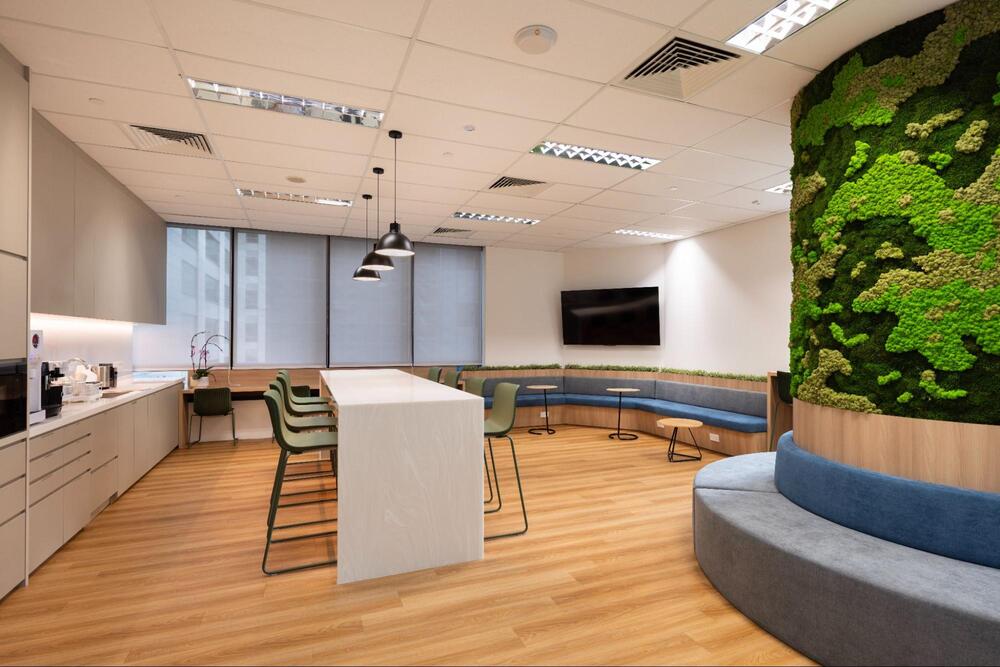
Collaborative zone defined by moss panels
5. FAQs About Moss Wall in Office
Do moss walls require watering?
No. Most office installations use preserved moss, which does not require watering or irrigation. Maintain 40–60% humidity, avoid direct sunlight, and prevent direct HVAC airflow.
Are moss walls expensive?
Costs vary based on size, design complexity, branding, and lighting integration. Preserved systems are generally more cost-efficient long-term due to minimal maintenance.
Do moss walls smell?
No. Properly preserved moss does not emit odor. Odors typically indicate excessive humidity, water exposure, or poor ventilation.
Do moss walls attract bugs?
No. Preserved moss does not attract insects because it is no longer biologically active. Maintain stable indoor conditions to prevent risk.
How long does a moss wall last?
A preserved moss wall typically lasts 5–10 years under controlled indoor conditions with proper humidity and limited direct contact.
Is a moss wall safe for indoor air quality?
Yes, when certified materials are used. Request fire rating and VOC documentation to ensure compliance with building and workplace standards.
Can moss walls include lighting?
Yes. Use low-heat LED systems with indirect placement and avoid direct heat contact to protect the moss surface.
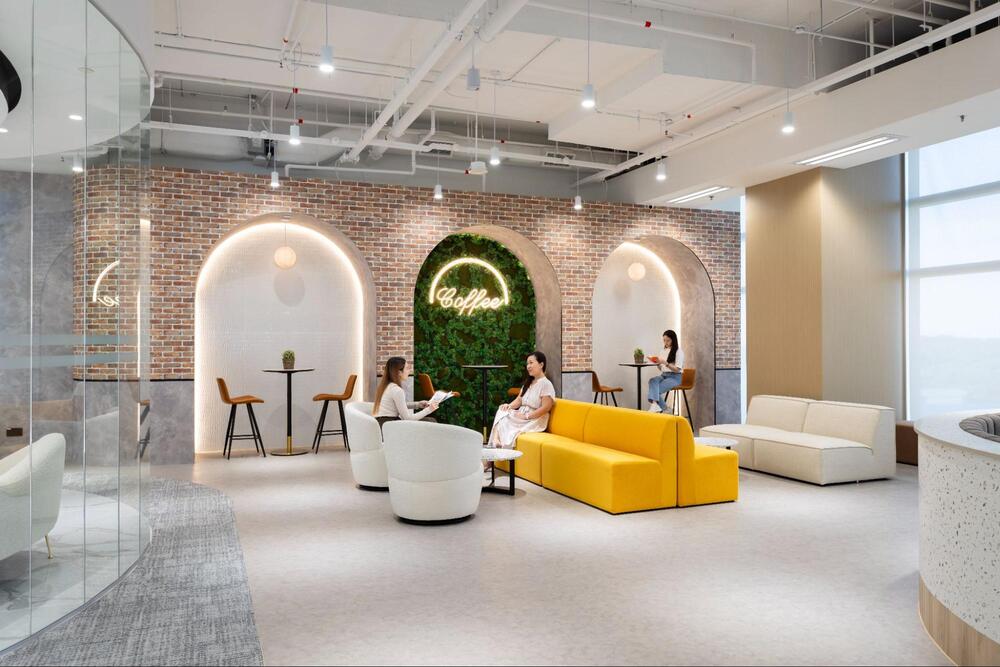
LED lighting placement for moss wall installation
A moss wall in office design delivers measurable value beyond aesthetics. It enhances acoustic performance, supports employee well-being, reduces operational maintenance, and aligns with sustainable building objectives. When specified correctly, it becomes a long-term workplace asset rather than a short-term visual feature.
To ensure design integrity, technical compliance and lasting performance, professional planning and installation are essential. OSCA specializes in workplace design and build Singapore solutions, including customized moss wall systems tailored to corporate environments. From concept development and brand integration to material specification and installation management, OSCA delivers solutions that balance creativity with technical precision.
If your organization is considering integrating a moss wall into its workspace, consult OSCA to develop a solution aligned with your operational goals, brand identity and sustainability standards.