When an office lease is approaching expiry, the cost of moving into the next workplace is only one side of the budget. The workplace you are leaving may also need to be reinstated before it can be handed back to the landlord. For businesses in Singapore, office reinstatement can involve anything from removing partitions and furniture to restoring flooring, ceilings, electrical services and other alterations done during the tenancy.
The cost therefore depends on much more than the floor area. Two offices of the same size can require very different budgets depending on how extensively they were fitted out, what the lease requires, the condition of the premises and how much time is available before handover.
This guide looks at what influences office reinstatement cost in Singapore, what a typical reinstatement scope may include, how the process fits into lease expiry planning and what businesses should check before returning the premises.

The reinstatement scope should begin with understanding what was changed during the tenancy and what condition the landlord requires at handover.
1. What Is Office Reinstatement?
Office reinstatement is the process of returning a leased workplace to the condition required by the tenancy agreement and landlord before the lease is handed back.
It is sometimes referred to as make-good works.
However, “original condition” does not always mean exactly the same thing for every office.
The required handover condition depends on:
- The lease agreement
- Landlord requirements
- Building management guidelines
- Alterations made during the tenancy
- Approved drawings and records
- Any separate agreement reached with the landlord before handover
For one office, reinstatement may involve relatively straightforward removal and “making-good” the space.
For another, it may involve demolition of partitions, removal of bespoke joinery, restoration of ceilings and floors, electrical and data removal, M&E modifications and several rounds of inspection.
This is why reinstatement planning should begin with the lease and required handover scope, rather than with a generic list of construction works.
2. How Much Does Office Reinstatement Cost in Singapore?
There is no single rate that accurately applies to every commercial office.
Public Singapore contractor guides published in 2026 cite wide variation. Some reference approximately S$3–12 per sq ft depending on scope, while another contractor quotes approximately S$10–40+ per sq ft, particularly as partition, electrical and M&E requirements become more extensive.
These figures should be treated as early market references, not as an OSCA Asia quotation.
The variation itself is important.
A lightly fitted office that mainly requires furniture removal, repainting and minor making-good works cannot be priced in the same way as an extensively fitted workplace containing:
- Full-height partitions
- Bespoke joinery
- Raised flooring
- Special lighting
- Meeting-room AV systems
- Additional electrical points
- Modified air-conditioning systems
- Pantry plumbing
- Server-room infrastructure
The more useful question is therefore not simply: “How much does reinstatement cost per square foot?”
It is: “What exactly needs to be removed, restored and accepted before the landlord will take the premises back?”
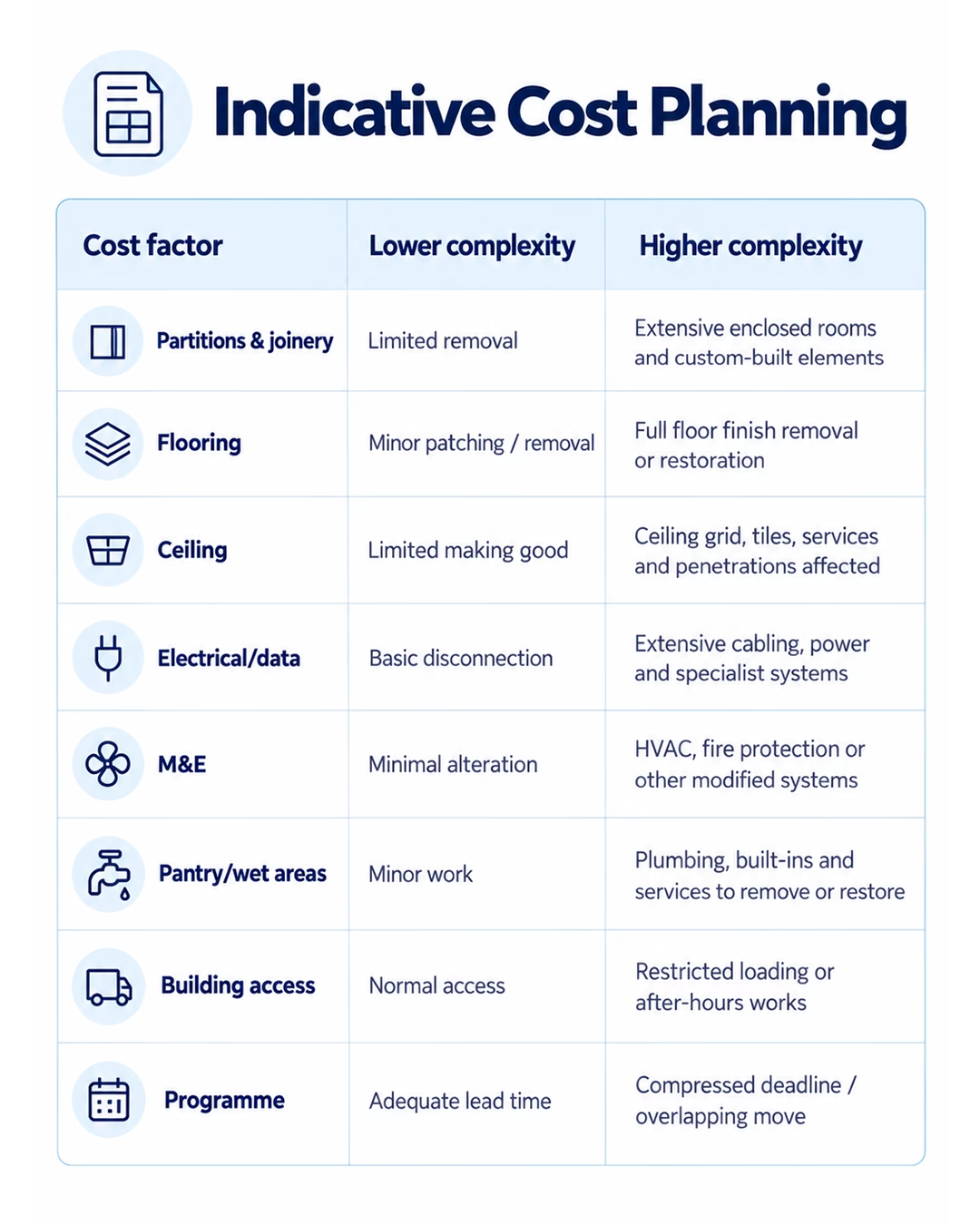
Reinstatement cost is driven by scope and site conditions, not floor area alone.
3. What Affects Office Reinstatement Cost?
3.1 Reinstatement Scope
The lease is the starting point.
A landlord may require selected alterations to be removed, or the premises may need to be returned much closer to the original base-build condition.
A wider scope naturally increases labour, materials, disposal and coordination requirements.
Before requesting quotations, confirm:
- What must be removed?
- What can remain?
- What finishes need to be restored?
- Which landlord specifications apply?
- Are there original drawings available?
- What needs to pass final inspection?
A quotation can only be accurate when the required end condition is clear.
3.2 Size and Fit-Out Complexity
Larger offices generally involve more work, but floor area alone does not determine cost.
A 10,000 sq ft open-plan workplace may be simpler to reinstate than a smaller office containing extensive meeting rooms, custom joinery and specialist systems.
The density of the existing fit-out matters.
Elements that may increase dismantling and restoration work include:
- Glass partitions
- Full-height rooms
- Built-in cabinetry
- Feature ceilings
- Custom lighting
- Raised platforms
- Acoustic installations
- Branded features
This is why a site inspection is more useful than applying a generic rate to the floor area.
3.3 M&E and Building Services
Mechanical and electrical works can materially affect the reinstatement scope.
Depending on what was altered during the tenancy, works may include:
- Removing additional power points
- Removing data cabling
- Disconnecting specialist lighting
- Restoring air-conditioning arrangements
- Modifying or reinstating sprinklers
- Removing supplementary systems
- Testing affected services
Fire safety works are particularly important to assess correctly.
SCDF states that works involving the installation, alteration, removal or relocation of fire-protection systems, or layout changes affecting escape routes or fire compartments, can require fire-safety plan approval. Certain qualifying minor A&A works may instead follow the Minor A&A process through a Qualified Person.
The practical point is not that every reinstatement project requires the same submission.
It is that regulatory and technical requirements should be checked against the actual works before the programme is finalised.
3.4 Building Access and Working Hours
Physical work is only one part of the overall cost.
Building-management rules can affect how efficiently they can be completed.
Consider:
- Loading-bay availability
- Cargo-lift booking
- Hoarding requirements
- Waste-removal procedures
- Contractor access
- Security registration
- Noise restrictions
- Permitted working hours
- Weekend or after-hours requirements
Restricted working windows can increase labour and tighten timelines.
3.5 Timeline and Handover Date
A compressed timeline reduces flexibility.
If reinstatement is left until the final weeks of a lease, businesses may have less time to:
- Clarify landlord requirements
- Compare quotations
- Obtain approvals
- Coordinate contractors
- Schedule building access
- Rectify issues identified during inspection
That can turn a manageable construction scope into a difficult handover problem.
The lease expiry date should therefore work backwards into the reinstatement programme, not mark the point when planning begins.
4. What Does Office Reinstatement Usually Include?
There is no universal reinstatement scope, but commercial office reinstatement in Singapore can involve a combination of the following works:
Demolition and removal
- Remove partitions
- Remove doors and glazing
- Remove built-in joinery
- Remove tenant-installed fixtures
- Remove branding and signage
- Remove loose furniture where required
Ceiling and flooring
- Remove tenant-added ceiling features
- Make good ceiling openings
- Reinstate ceiling tiles or grids
- Remove floor finishes
- Restore flooring according to landlord requirements
Electrical, data and technology
- Remove additional sockets
- Disconnect tenant-installed lighting
- Remove data cabling
- Remove AV equipment and associated infrastructure
- Make good affected electrical points
M&E and fire-protection systems
Depending on the existing fit-out and approved scope:
- Air-conditioning modifications
- Sprinkler relocation or reinstatement
- Fire-alarm related works
- Mechanical ventilation changes
- Plumbing removal or capping
Making-good works
- Patch walls and ceilings
- Repaint surfaces
- Repair affected finishes
- Clean the premises
- Remove debris and waste
A good reinstatement quotation should identify these items clearly rather than presenting an unexplained lump sum.
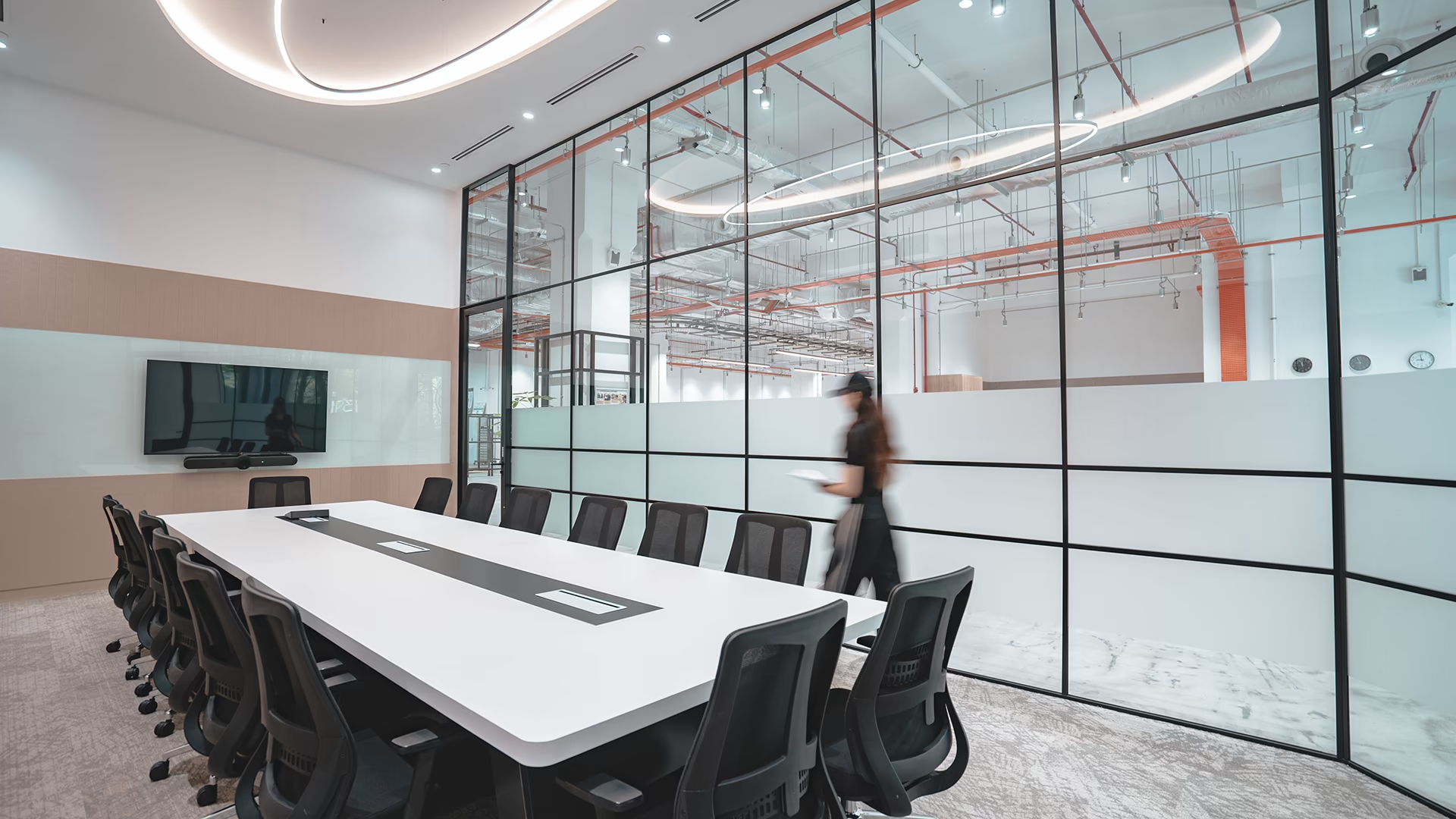
Office reinstatement can involve architectural, electrical and M&E works as well as demolition and final making good.
5. How Long Does Office Reinstatement Take?
There is no fixed reinstatement timeline.
The duration depends on:
- Office size
- Existing fit-out
- Scope of removal
- M&E requirements
- Building restrictions
- Required submissions
- Waste and access arrangements
- Handover deadline
- Rectification after inspection
A relatively light reinstatement may take significantly less time than a large commercial office with extensive partitions and building services.
The best approach is to plan backwards from the landlord handover date.
Businesses should allow time for four separate activities:
- Scope confirmation and site inspection
- Quotation, approvals and Planning
- Physical reinstatement works
- Inspection, defects and final handover
The final item is often overlooked.
Construction completion does not automatically mean landlord acceptance.
Time should remain available to rectify issues identified during the handover inspection.
6. The Office Reinstatement Process
A practical reinstatement timeline can follow six stages.
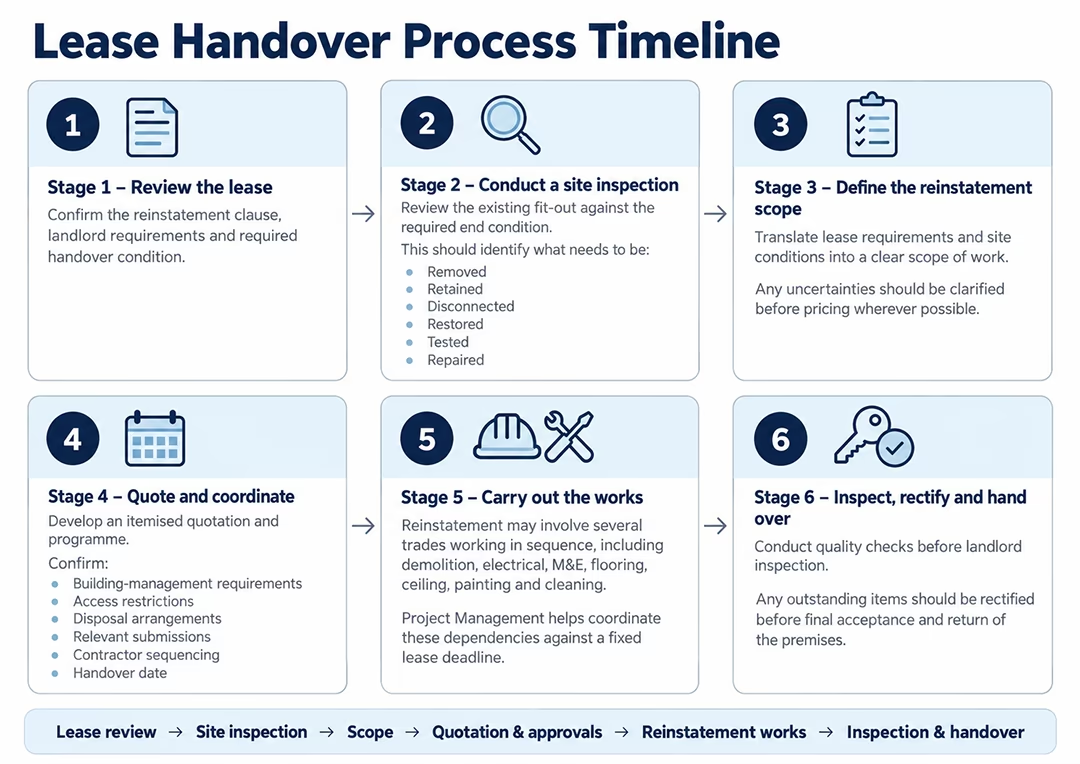
Starting with the lease and site condition creates a clearer path from scope definition to final handover.
7. Lease Handover Checklist
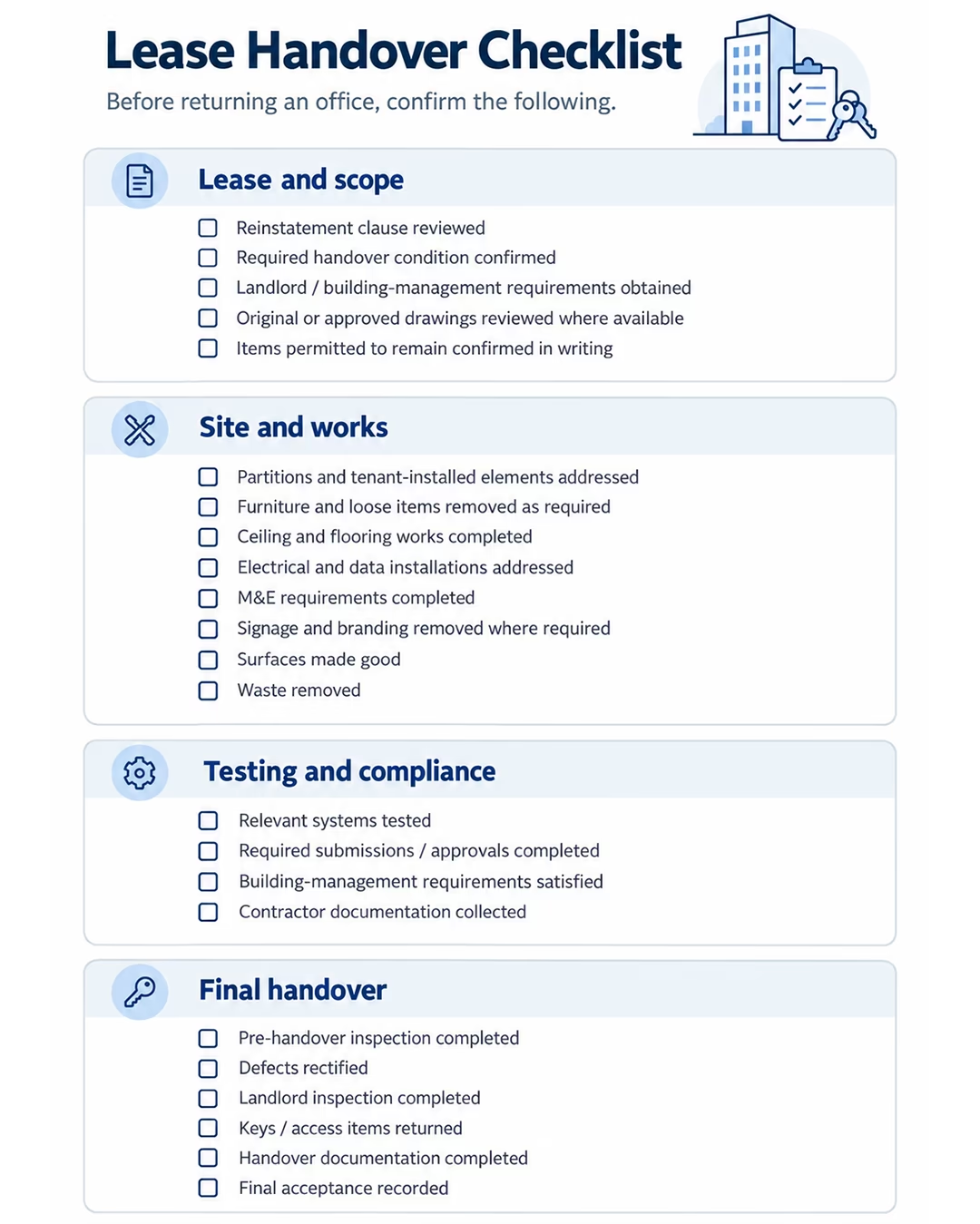
A handover checklist helps prevent small outstanding items from becoming last-minute delays at lease expiry.
8. Common Reinstatement Cost Mistakes
Pricing before confirming the lease requirement
A low quotation may not reflect the final cost if landlord-required works are excluded.
Better approach:
Confirm the handover condition first, then price the complete scope.
Comparing quotations only by total price
Two contractors appear to be quoting the same project while including very different scopes.
Better approach:
Compare exact project scope, exclusions, testing, disposal, access requirements and handover responsibilities.
Assuming cost per square foot tells the whole story
Floor area is useful for early benchmarking, but fit-out complexity can change the final cost substantially.
Better approach:
Use per-square-foot figures only as a preliminary reference and validate the actual scope through a site assessment.
Leaving reinstatement until after the office relocation is planned
The outgoing and incoming workplaces may have overlapping requirements.
Better approach:
Plan office relocation and reinstatement within the same lease-exit timeline.
Not Factoring in Landlord Inspection and Rectification
Finishing construction on the final lease date leaves almost no room for correction.
Better approach:
Build an inspection and rectification buffer into the timeline.
9. Office Reinstatement and Office Relocation Should Be Planned Together
For relocating businesses, lease expiry can create two workplace projects at the same time.
The new workplace may be going through:
- Design
- Fit-out
- Technology installation
- Furniture installation
- Testing
- Move preparation
Meanwhile, the outgoing workplace may require:
- Asset removal
- Reinstatement
- Disposal
- Inspections
- Final handover
Planning them separately can lead to unexpected gaps.
For example, furniture scheduled for transfer cannot also be removed as part of the reinstatement scope.
Likewise, the outgoing office may need to remain operational until the new workplace is ready.
This is where coordinated Project Management becomes useful.
The timeline needs to specify not just when construction has finished, but when people, equipment and operations can actually move.
10. Common Questions About Office Reinstatement in Singapore
10.1 What is office reinstatement?
Office reinstatement is the process of returning leased premises to the condition required by the lease and landlord before handover.
The scope may include removal, demolition, M&E works, reinstatement of finishes, cleaning and final rectification.
10.2 How much does office reinstatement cost in Singapore?
There is no universal rate.
Public market references vary considerably, reflecting different assumptions about scope. Cost is influenced by office size, fit-out complexity, M&E work, building rules, access, programme and landlord requirements.
A site survey and confirmed handover scope are more reliable than applying a generic rate alone.
10.3 When should I start planning office reinstatement?
Reinstatement should be reviewed as part of the wider lease-expiry process rather than left until the final weeks.
The earlier the scope is understood, the more time there is to clarify landlord requirements, budget accurately and coordinate the work with an office relocation.
10.4 Do all offices need full reinstatement?
Not necessarily.
The required scope depends on the lease and any agreement with the landlord.
Some elements may be allowed to remain, while others may need to be removed or restored.
Confirm this in writing rather than assuming.
10.5 Can the landlord allow existing fit-out elements to remain?
Potentially.
A landlord may agree to retain selected items or modifications, but this should be formally confirmed before they are excluded from the reinstatement scope.
10.6 Does office reinstatement require approvals?
It depends on the work.
For example, SCDF requires plan approval for prescribed fire-safety works, while qualifying minor A&A works can follow a separate process through a Qualified Person.
The project team should identify which requirements apply to the actual scope rather than assume every reinstatement follows the same approval process.
10.7 What happens if reinstatement is not completed before lease handover?
The commercial consequences depend on the lease and landlord agreement.
Potential issues may include delayed acceptance, additional rectification required or other lease-related costs.
The specific contractual consequences should therefore be checked against the tenancy agreement rather than assumed.
11. How OSCA Asia Approaches Reinstatement Planning
At OSCA Asia, the first step in a workplace project is understanding the site, requirements and constraints before physical work begins.
OSCA Asia’s Design & Build process similarly begins with feasibility and site assessment, followed by design development, coordination, Project Management and handover.
The same principle is particularly important when planning office reinstatement.
Before determining the quotation and programme, the project needs clarity around:
- Lease obligations
- Existing site conditions
- Landlord requirements
- Required handover condition
- Technical scope
- Building rules
- Final lease date
OSCA Asia’s existing office renovation offering also includes reinstatement within its broader workplace-delivery capabilities.
The objective is not simply to remove what was built.
It is to coordinate the scope, timeline and handover requirements so the outgoing workplace can be closed properly while the business prepares for what comes next.

A site assessment helps translate lease obligations and existing conditions into a clearer reinstatement scope and quotation.
Is Your Office Lease Approaching Handover?
The most reliable reinstatement budget starts with the actual premises, lease requirements and landlord handover condition.
OSCA Asia can review your existing workplace, identify the likely reinstatement scope, and prepare a quotation based on the work required before handover.
Contact OSCA Asia to Request an Office Site Assessment & Quotation
OSCA Asia | Designing Adaptive Workplaces