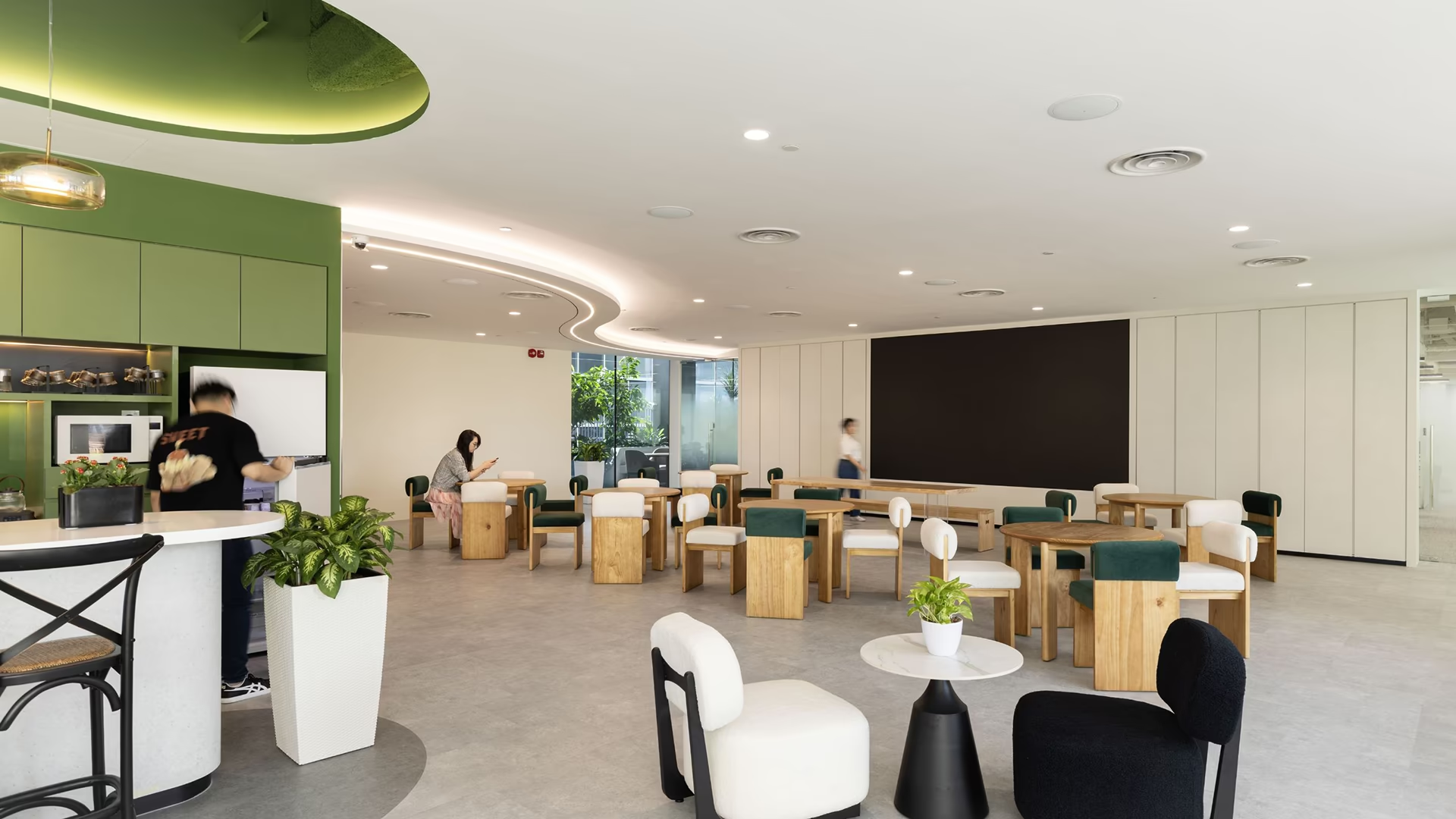
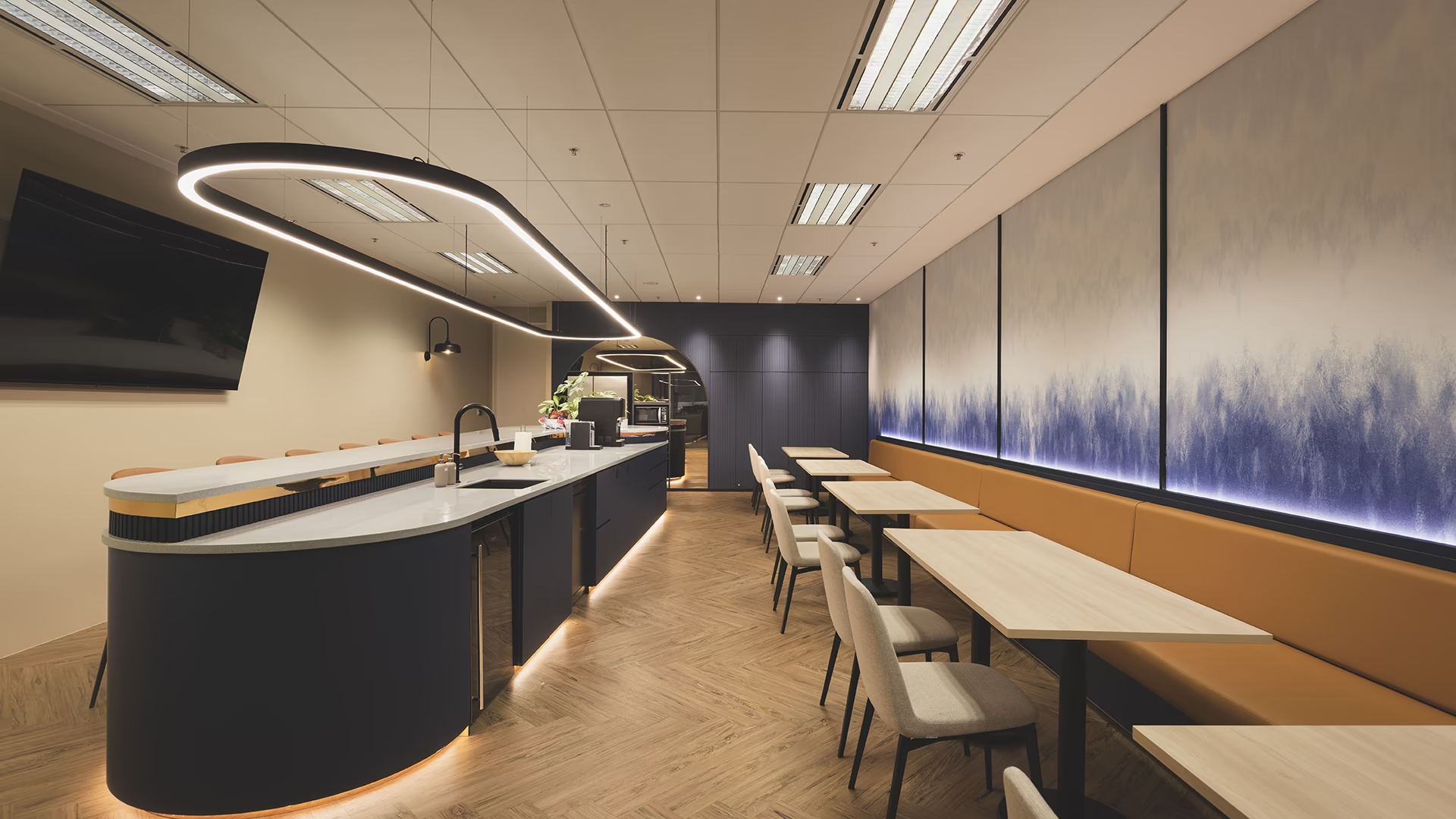
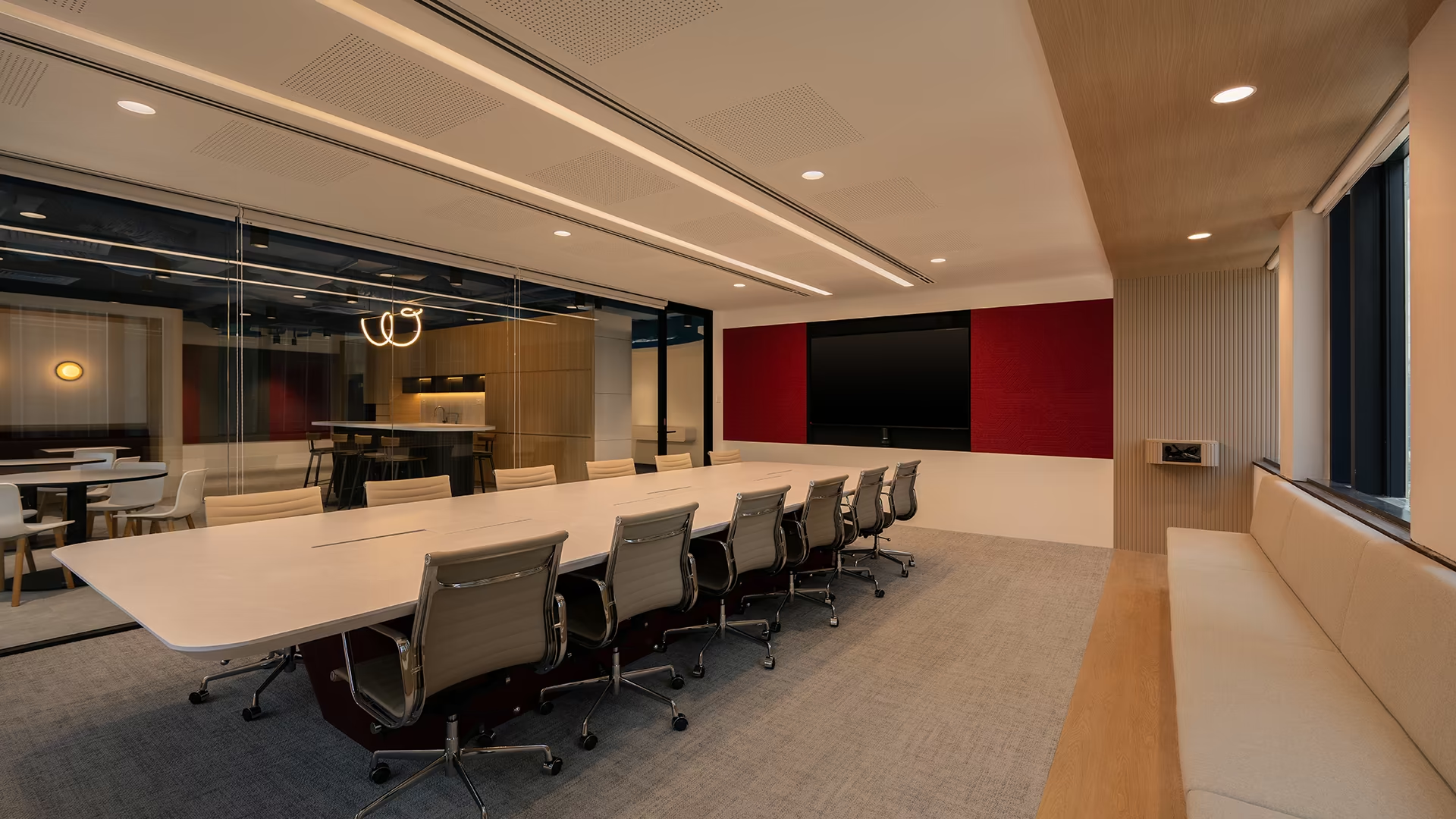
When comparing Design and Build vs traditional procurement in Singapore, the main difference is not simply whether one model is faster or cheaper.
A design and build vs traditional procurement comparison starts with how each model organises project responsibility.
- Who develops the design?
- When does the contractor become involved?
- Who manages the interface between design and construction?
- When does the client receive meaningful cost information?
- Who is responsible when a design decision affects site delivery?
Both approaches can deliver successful office projects.
The useful question is which structure best fits the client’s brief, internal resources, desired level of design independence and project constraints.
This guide focuses on that decision. It is not legal advice. Actual obligations, liabilities and risk allocation depend on the specific contracts and appointments used for a project.
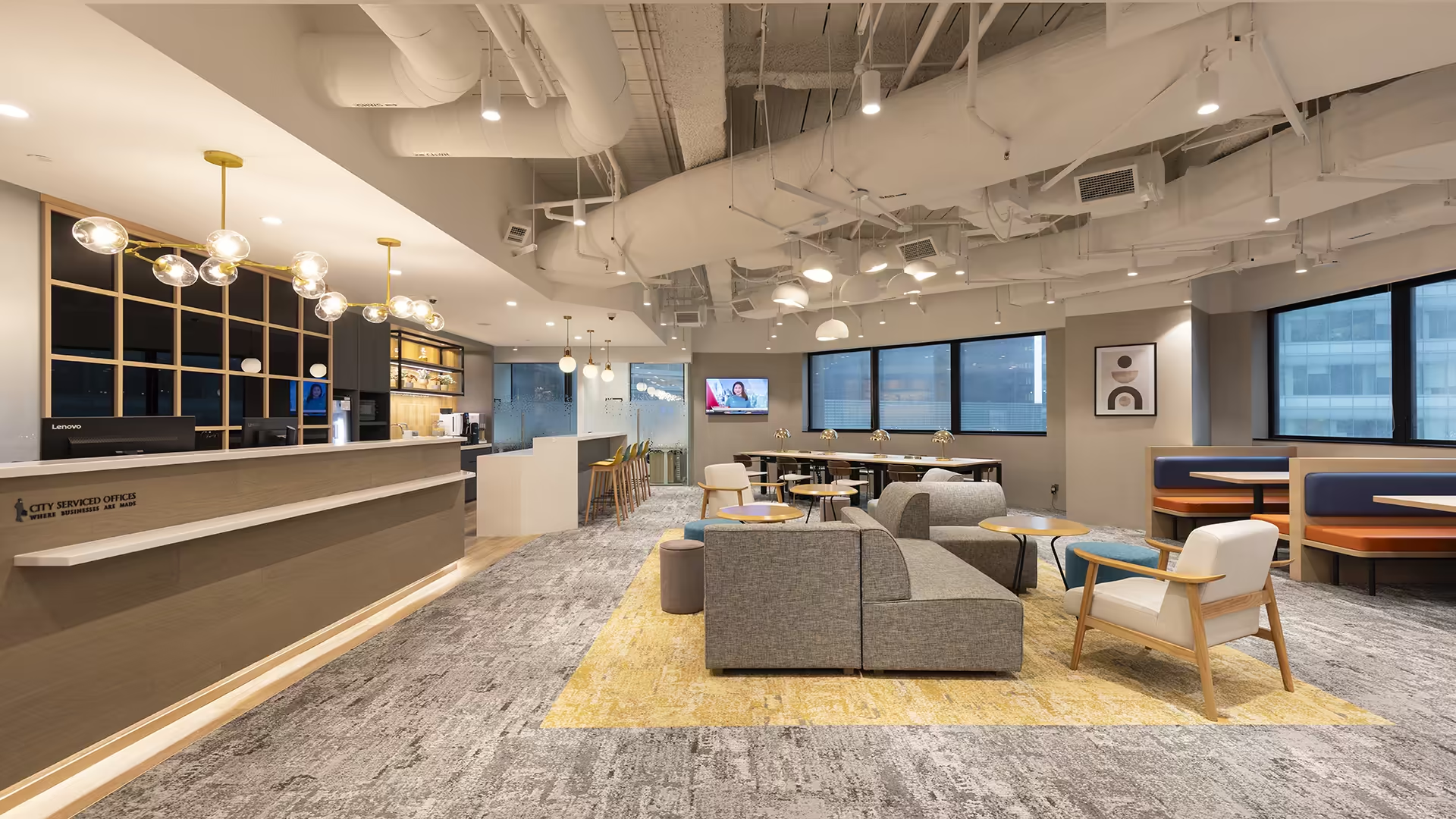
Choosing the right procurement model begins with understanding design responsibility, delivery coordination and commercial priorities.
1. What Is Design & Build?
Design & Build is a procurement model that combines design and construction responsibility within one delivery structure.
BCA’s procurement guidance describes D&B as a model where the functions of design and construction are placed with the builder.
This does not mean one individual performs every function.
A Design & Build project can still involve:
- Interior designers
- Architects or engineers where required
- Project managers
- M&E specialists
- Contractors
- Specialist subcontractors
- Furniture suppliers
- Technology providers
The difference lies in how these responsibilities are organised.
For an office client, the principal benefit can be a more integrated relationship between design development, buildability and construction delivery.
2. What Is Traditional Procurement?
In a traditional consultant-led structure, the client typically appoints design or professional consultants separately from the construction contractor.
A simplified structure might be:
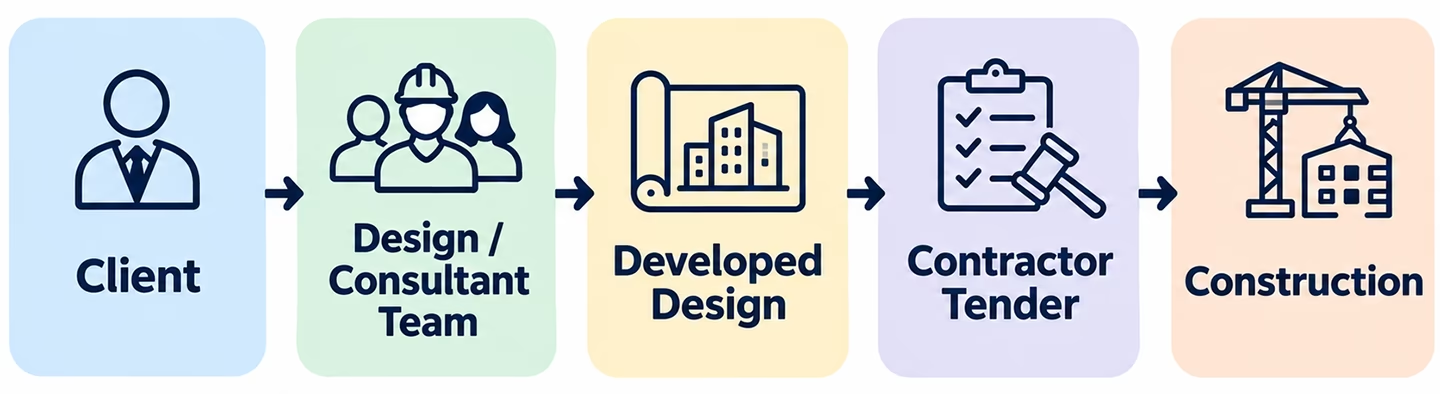
Traditional procurement typically separates design consultancy from the construction contract.
This creates a clearer separation between design consultancy and construction execution.
Singapore’s BCA maintains a Standard Consultancy Agreement for public-sector architectural, civil/structural, M&E, quantity-surveying and project-management services, while construction contracts are covered through separate contractual frameworks.
Private office projects do not necessarily use these public-sector forms, but the distinction provides a useful illustration of how consultancy and construction responsibilities can be contractually separated.
3. The Main Difference: Where Responsibility Sits
To compare design and build vs traditional procurement, start with where responsibility sits:
Design & Build
The client appoints an integrated delivery party for the design-and-construction obligations defined in the contract.
Traditional procurement
The client holds separate relationships with the consultant/design team and construction contractor.
This difference affects communication and interface management.
Imagine a ceiling design conflicting with an M&E requirement.
Under an integrated D&B structure, the Design & Build team coordinates the resolution within its delivery organisation.
Under a traditional structure, the consultant may need to revise or clarify the design while the contractor assesses construction implications.
Neither model is inherently better.
The client needs to decide how much coordination it wants to manage directly and how independent it wants its design relationship to remain.
4. Design Control
Traditional procurement can be appropriate where the client wants a consultant-led design to reach a high level of development before contractor appointment.
This can provide a separate design advocate and allow construction contractors to tender against a more developed design.
Design & Build can also provide significant client control over the workplace design.
However, design development occurs within a delivery structure where construction, cost and buildability can be considered earlier.
The question is therefore not:
Which model gives the client design control?
Both can.
The better question is:
How does the client want design decisions to be developed, challenged and approved?
5. Cost and Price Certainty
Cost certainty depends on more than procurement type.
Design & Build
Earlier contractor involvement can allow construction knowledge and cost implications to inform design development.
BCA’s current Early Contractor Involvement guidance notes that involving contractors during design can introduce practical construction knowledge before designs are finalised.
However, an early price is only as reliable as the scope it covers.
Undefined requirements can still create later cost movement.
Traditional procurement
A developed consultant design can support contractor tendering against a more defined scope.
This can improve bid comparability.
However, a tender price does not eliminate later changes caused by revised client requirements, unforeseen conditions or incomplete information.
Compare scope before price
Regardless of model, review:
- Included work
- Exclusions
- Allowances
- Furniture
- Technology
- M&E
- Specialist scope
- Professional fees
- Building/approval requirements
- Change-control mechanism
Price certainty is influenced by scope clarity as much as procurement structure.
6. Timeline and Buildability
Design & Build is often associated with faster delivery because design, cost and construction input can overlap earlier.
That can be useful for workplace projects facing a fixed lease or move-in date.
But it is not a universal rule.
Late client decisions, authority requirements, procurement lead times and complex site conditions can affect any project.
Traditional procurement is generally more sequential because design is developed further before contractor tender and appointment.
That can be an advantage where the client wants the design substantially resolved before construction pricing.
The real trade-off is therefore:
| Design & Build | Traditional Procurement |
|---|---|
| Earlier integration of design and construction input | Greater separation between design and construction |
| Potential for overlapping activities | More sequential design → tender → construction flow |
| Buildability can influence design sooner | Design may be developed further before contractor involvement |
7. Coordination and Communication
Office projects can involve:
- Design
- M&E
- AV
- IT
- Furniture
- Security
- Fire protection
- Building management
- Specialist trades
- Construction
Under Design & Build, coordination sits more centrally within the integrated delivery organisation for the scope it has accepted.
Under traditional procurement, interfaces between consultant and contractor need to be managed through the separate appointments.
For clients with experienced internal property teams, managing multiple parties may be comfortable.
Other clients may prefer a more consolidated point of accountability.
Neither structure removes the need for clear communication.
8. Variations and Change
Variations can occur under either procurement model.
Common causes include:
- Client changes
- Unexpected site conditions
- Authority requirements
- Landlord requirements
- Material availability
- Technology changes
- Design development
- Previously unidentified services
Before appointment, clients should understand:
- What counts as a change?
- Who can instruct it?
- How is cost assessed?
- How is approval recorded?
- What happens if the change affects the timeline?
- Who coordinates resulting design changes?
A Design & Build contract does not remove variations.
A traditional tender does not guarantee that nothing will change.
Clear scope and disciplined decisions remain important under both models.
9. Contractual Responsibility and Risk
Risk allocation should not be described with broad statements such as:
“Design & Build transfers all project risk to the contractor.”
That is too simplistic.
Actual responsibilities depend on the specific contract, scope and appointments used for the project.
Singapore’s Building and Construction Authority maintains separate Public Sector Standard Conditions of Contract (PSSCOC) forms for Construction Works and Design & Build. BCA notes that standardised contract terms can support clearer contract administration and allow practices such as fairer allocation of risk between contracting parties.
BCA also maintains the Standard Consultancy Agreement (SCA) for public-sector construction-related consultancy services, including architectural, civil and structural engineering, M&E, quantity surveying and project management appointments. The SCA establishes common terms around consultancy obligations and liabilities and similarly addresses the allocation of risk between parties.
These are public-sector standard forms and are not presented here as the contracts used for every private office project. They provide useful official examples of how responsibilities can be structured differently across construction, Design & Build and separate consultancy appointments.
Before selecting a procurement route, clients should understand:
- Who is responsible for design completeness?
- Who coordinates design and construction?
- Who is responsible for information supplied by the client?
- Who manages specialist design?
- Who carries specific site-condition risks?
- Who manages authority and approval interfaces?
- How are delays addressed?
- How are variations valued and approved?
- What responsibilities remain with the client?
The procurement label alone cannot answer these questions.
The contract and individual appointments must define them.
10. Design and Build vs Traditional Procurement: Comparison Table
| Decision factor | Design & Build | Traditional Procurement |
|---|---|---|
| Design and construction structure | Integrated | Separate appointments |
| Contractor involvement | Earlier | Generally later |
| Design development | Informed by delivery/buildability | Consultant-led before contractor appointment |
| Principal client interfaces | More consolidated | Multiple separate interfaces |
| Tendering | Integrated design-and-build proposal | Construction tender against developed design |
| Independent design consultant | Depends on appointment | More clearly separated |
| Cost input | Can develop earlier with contractor involvement | Detailed tender after greater design development |
| Timeline | Potential for greater overlap | More sequential |
| Coordination | More centralised within D&B scope | Consultant/contractor interface needs management |
| Variations | Still possible | Still possible |
| Risk allocation | Contract-specific | Contract-specific |
| Best fit | Integration and early delivery input are priorities | Independent design and separate construction tendering are priorities |
This table is a decision aid, not a ranking.
11. A Real OSCA Asia Design & Build Example
OSCA Asia’s Design & Build portfolio includes the OKG workplace at Marina Bay Financial Centre, a project covering approximately 30,000 sq ft with a listed project duration of 16 weeks.
The workplace concept drew inspiration from Singapore’s Formula 1 street race, with a racing McLaren car incorporated as a prominent feature within the office. The feature became part of the wider spatial and brand experience rather than being treated as a standalone display.
OKBL’s client testimonial also highlights OSCA Asia’s attention to detail, commitment to quality and design ideas, describing the renovation process as seamless and the completed workplace transformation as exceeding expectations.
The example should not be read as evidence that Design & Build is always the preferred procurement model, nor should the 16-week duration be treated as a standard timeline for another project.
Instead, it provides first-party evidence of a workplace with a highly specific design concept being carried from design intent through to completed delivery.
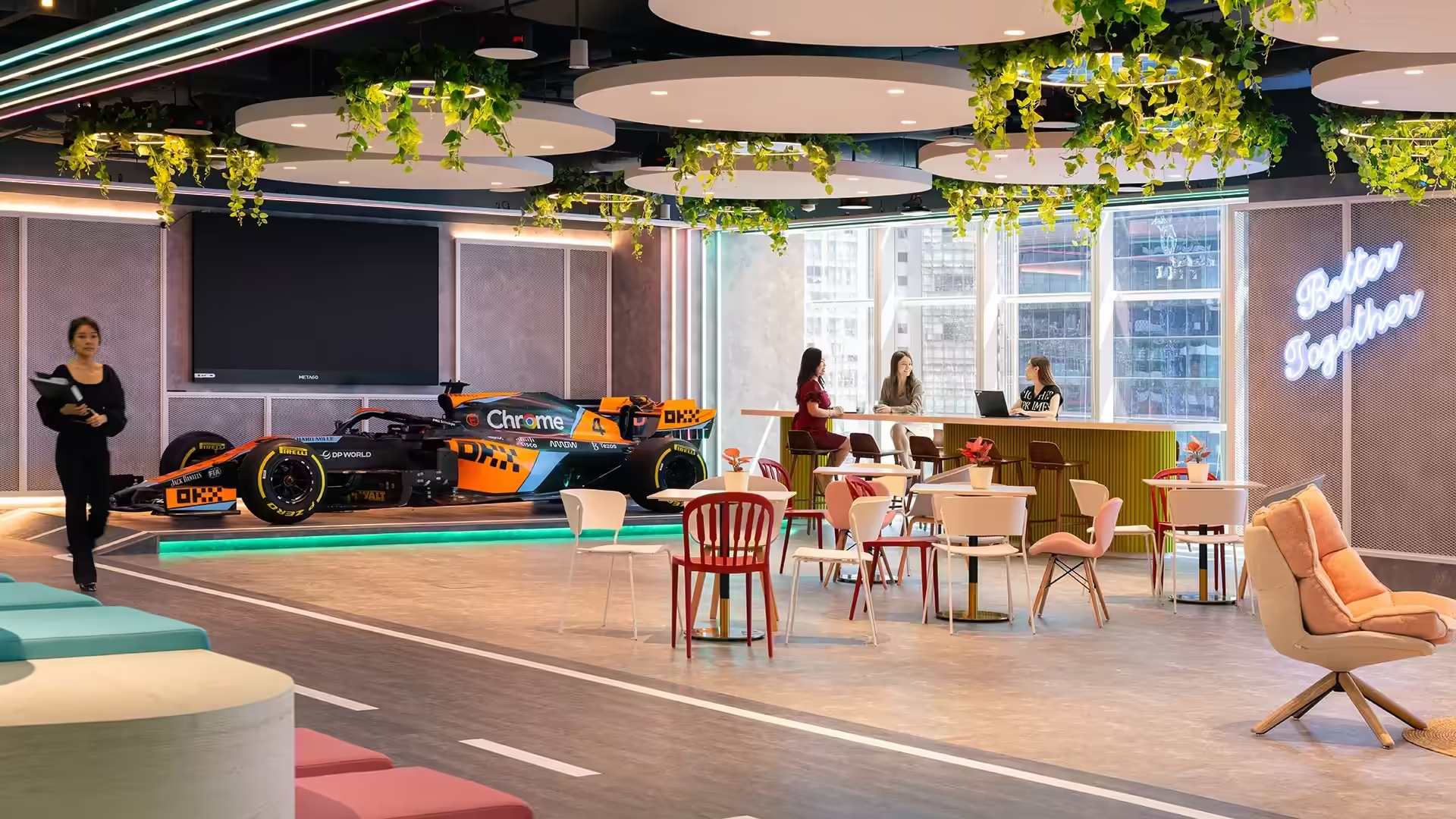
OKG provides a real project example of a distinctive workplace concept being translated into the completed environment.
12. When Design & Build May Be a Better Fit
Design & Build may suit a workplace project where:
- The client prefers a more integrated delivery structure
- Early construction input would be valuable
- The move-in timeline is important
- Cost needs to develop alongside the design
- The client prefers fewer principal delivery interfaces
- Design and construction coordination is a major concern
- The organisation has limited internal resources for managing separate consultants and contractors
This does not mean the client becomes passive.
A clear brief and timely decisions remain essential.
13. When Traditional Procurement May Be a Better Fit
Traditional procurement may suit a project where:
- The client wants an independent design-consultant relationship
- The design needs substantial development before contractor appointment
- Competitive construction tendering against a defined design is important
- The client has resources to manage multiple appointments
- Governance requires a clear separation between design and construction
- The organisation has an established consultant/procurement framework
Traditional procurement should not be treated as an outdated model.
For some clients, the separation provides exactly the design independence and procurement structure they need.
14. Practical Procurement Decision Checklist
Before selecting a procurement model, clients should review how they want design, construction, commercial decisions and project responsibility to be structured.
About the brief
- Are the workplace requirements already clear?
- Is the project site confirmed?
- Has the space-planning direction been developed?
- Are major technical or operational constraints already known?
About design
- Is independent design advice important?
- How far should the design be developed before contractor appointment?
- Who will coordinate specialist design requirements?
- Who will review and protect the approved design intent during construction?
About construction
- When should the contractor become involved?
- Who will coordinate construction methodology and buildability?
- Who will manage specialist trades?
- Who will respond when site conditions affect the design?
About cost
- When does the client need meaningful cost information?
- Are competing proposals based on an equivalent scope?
- Are exclusions and allowances clearly identified?
- How will variations be assessed and approved?
About the timeline
- Is there a fixed lease, handover or move-in date?
- Would earlier contractor involvement help address buildability or procurement issues?
- Are authority, landlord and building-management requirements understood?
- Are there long-lead items that could affect delivery?
About project management
- Can the client manage separate consultant and contractor appointments?
- Is a more consolidated point of accountability preferred?
- Who will coordinate decisions, changes and stakeholder communication?
About contractual responsibility
- Who is responsible for design completeness?
- Who manages the interface between design and construction?
- Which responsibilities remain with the client?
- How are delays, variations and specific project risks treated under the proposed contract?
The answers will not automatically point to one procurement model. They help identify which delivery structure is better aligned with the client’s resources, priorities and project requirements.
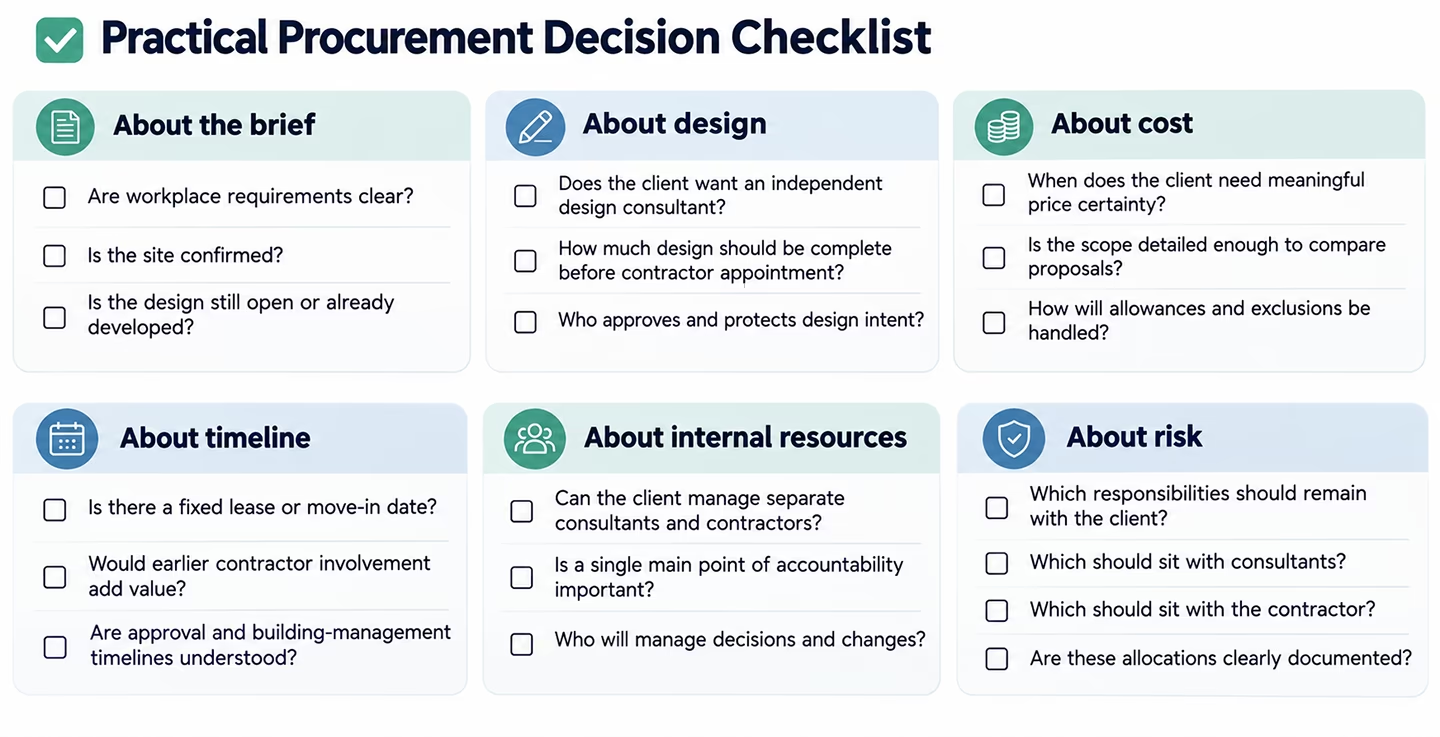
A practical checklist for comparing design control, contractor involvement, commercial scope, project timelines and risk.
15. Common Questions
Is Design & Build always cheaper?
No.
Final cost depends on scope, specification, site conditions and changes.
Is Design & Build always faster?
No.
It may allow earlier coordination and overlap, but the actual timeline still depends on the project.
Does traditional procurement provide better design quality?
Not inherently.
Quality depends on the brief, people, design process, coordination and execution.
Does Design & Build transfer all risk to the contractor?
No.
Risk allocation depends on the contract.
Can project management be used with both models?
Yes.
Project management can support either model by coordinating scope, timeline, stakeholders and decisions.
When should the procurement route be decided?
Ideally before appointments and contractual responsibilities are fixed.
16. Compare Delivery Models With OSCA Asia
For any design and build vs traditional procurement decision, the right model depends on the project and the organisation delivering it.
Design & Build may suit businesses seeking integrated delivery and earlier construction input.
Traditional procurement may suit businesses that want a separate design-consultancy relationship before appointing a construction contractor.
OSCA Asia provides Design Consultancy, Design & Build and Project Management capabilities, allowing the delivery structure to be considered against the actual workplace brief rather than assuming one model is universally preferable.